Narsimha Avatar: The Untold Story of Hiranyakashipu’s Reign & How the Holika Legend Was Added Later
By Krishna Kumar | Senior Pop Culture & Manga Analyst | ZealPlane Chronicles
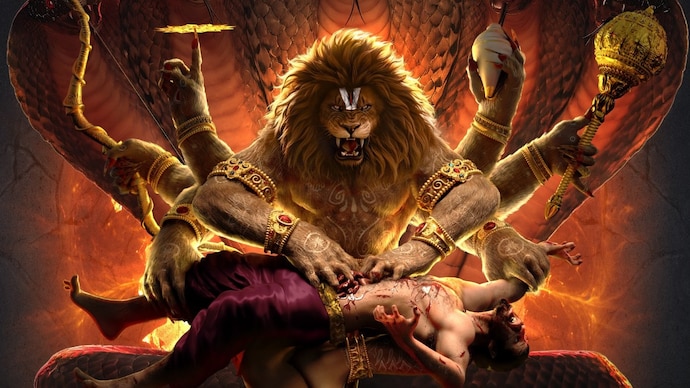
The story of the Narsimha Avatar is one of Hinduism’s most celebrated tales — a divine intervention where Lord Vishnu takes a half-man, half-lion form to destroy the demon king Hiranyakashipu and protect his devout son, Prahlada.
But how much of what we hear today is straight from the ancient scriptures, and how much is a later addition shaped by regional storytelling, folk traditions, and modern retellings? Let’s dig into the fact vs fiction of this timeless legend.
Fact: Hiranyakashipu’s Rule Was Long and Uneventful (at First)
According to the Bhagavata Purana and Vishnu Purana, Hiranyakashipu was not just a random villain — he was a powerful king who ruled over the three worlds for thousands of celestial years after receiving a boon from Lord Brahma.
The boon made him nearly invincible: he could not be killed by man or beast, during day or night, inside or outside, on earth or in the sky, by any weapon.
His reign was marked by immense prosperity and order initially, but arrogance and his hatred of Vishnu eventually led to tyranny.
Prahlada, his son, was born much later in his reign and became the reason for the fateful confrontation with Narsimha.
Scriptures suggest his rule lasted for an entire age of the gods (which in human years could span hundreds of thousands), making him one of the longest-reigning asuras in Hindu cosmology.
Fiction: The Holika Fire Story
Many people associate Prahlada’s story with Holika Dahan, celebrated during Holi. But here’s the truth:
The original Puranas — including the Bhagavata Purana, Vishnu Purana, and Harivamsa — do not mention Holika sitting in fire with Prahlada.
Holika herself is mentioned only as Hiranyakashipu’s sister, with a special cloth that protected her from fire, but her death-by-fire while holding Prahlada is a much later addition, possibly emerging from medieval folk traditions in North India.
Scholars believe this fire story merged with existing Holi spring festival traditions to give a moral and religious meaning to the celebration.
In fact, the Bhagavata Purana focuses far more on Prahlada’s unshakable devotion and the philosophical lessons from Narsimha’s appearance, rather than any elaborate fire test with Holika.
Fact: Narsimha’s Appearance Was Instant and Precise
The scriptures are very exact about the conditions:
Time: Twilight (sandhya kala) — neither day nor night.
Place: Threshold of the palace — neither inside nor outside.
Form: Neither man nor beast.
Weapon: Bare claws.
The act of killing was quick, almost instantaneous — unlike in films or popular retellings where it’s drawn out into a battle scene.
Fiction: The Emotional Melodrama
Modern adaptations often add:
Dramatic speeches before the killing.
A long-drawn fight scene.
Emotional last words from Hiranyakashipu.
Holika and Prahlada’s interactions as central to the climax.
In reality, the Puranic version is far more symbolic and straightforward — an avatar appears, the boon loopholes are bypassed, and justice is served in divine precision.
Why Do These Additions Exist?
Over centuries, oral storytelling, folk plays, and regional festivals wove together unrelated legends, like Holika Dahan, to make them more relatable to local audiences. This not only kept the story alive but also allowed communities to attach seasonal and moral significance to it.
The Takeaway
While Narsimha Avatar remains one of the most awe-inspiring episodes of Hindu mythology, the version we know today is a blend of scripture and centuries of folk creativity. Hiranyakashipu’s reign was far longer and more complex than pop culture suggests, and Holika’s fiery demise was never part of the original texts — it was a later addition that merged festival traditions with myth.
Featured Original Indian Indie Comics on ZealPlane
Explore original indie comics available free to read online:
Trending Indie Webcomics & Manga
- Read Chullu aur Lootera Bhoot online free
- Read My most favorite gags of Guddu online free
- Read Chullu aur Khadoos uncle online free
- Read Animocity Review online free
- Read When horror meets humour online free
- Read THE GIRL INSIDE THE CUPBOARD online free
- Read वज्रयोद्धा By Magha Studio online free
- Read Read 'GHOST IN THE CROWD' by Prince Ayush online free
Latest Pop Culture & Comic News
- One Piece Chapter 1195 Spoilers: Release Date, Global Schedule, and Early Elbaph Hints
- Are Demon Slayer's Breathing Techniques Actually Real — Or Just Visual Flair?
- Spider-Man Is Doing Luffy's Gear 2 Pose, and Fans Are Rightfully Losing It
- Spider-Man Is Doing Luffy's Gear 2 Pose, and Fans Are Rightfully Losing It
- The Ultimate Webtoon Canvas Size & Slicing Guide (2026): How to Format, Slice, and Publish Without Quality Loss
- Beyond Squid Game and Alice in Borderland: 5 Death Game Stories That Actually Get Under Your Skin