The Horror Manga You Should Be Reading This October (And How to Actually Get Into Junji Ito)
By ZealPlane Editorial | Senior Pop Culture & Manga Analyst | ZealPlane Chronicles
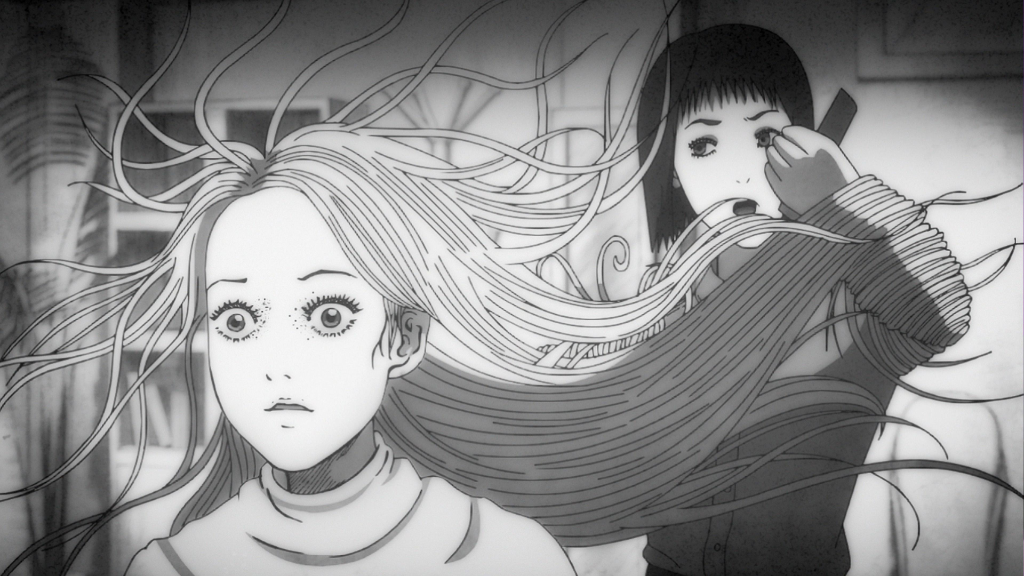
Let's be honest. If you've been putting off reading Junji Ito because you don't know where to start, October is the excuse you needed.
The Uzumaki (Deluxe Hardcover) anime just started airing on Adult Swim and Max. It's already generating real discussion — partly because of the unusual black-and-white animation style, and partly because the source material is one of those rare stories that people who've read it genuinely cannot stop recommending to people who haven't.
But here's what doesn't get said enough about Ito: his catalog is large and disorganized-looking, and there's no obvious front door. He has published short story anthologies, multi-volume long-form works, literary adaptations, and one-off experimental pieces — all under the same name, all in adjacent but distinct horror styles. Walking in blind and picking the wrong one first is a real problem. This guide is about solving that.
Do You Actually Need to Read Junji Ito in Order?
Short answer: No. Almost everything he's published is standalone. You can open any collection without knowing anything about his other work.
The one partial exception: Tomie — 20 chapters spread across multiple volumes following the same immortal protagonist. Even that doesn't require reading in strict sequence, but you'll get more from it if you do.
Two starting points, depending on what you want:
• One story that builds over multiple nights: Uzumaki
• Self-contained stories, one or two per night: Shiver
What the Uzumaki Anime Doesn't Show You
The anime adaptation is worth watching. But the manga does things the anime physically cannot.
Ito's panel compositions — the way he controls what you see and when, the detail he puts into the transformations, the specific texture of the biological horror — these are things that live on the page. The anime simplifies the town's degradation considerably. Some of the most disturbing chapters in the original manga are ones the show glosses over in a single scene.
So: watch the anime if you want, but don't assume you've experienced Uzumaki if you've only seen the series. You haven't.
Where to Actually Start: Two Paths
Path One — You Want One Long Story
Uzumaki
The setup is almost too simple to explain. A Japanese coastal town becomes, gradually and then catastrophically, obsessed with spirals. It starts with one man. Then his family. Then the entire town. Kirie Goshima, the high school student the story follows, keeps trying to rationalize what she's seeing — right up until rationalization stops being possible.
What makes Uzumaki work is that Ito commits completely to a single visual concept and then finds 20 different ways to make it horrifying. Spirals in pottery. Spirals in hair. Spirals in the way bodies break. By volume three, the geometry of the town itself has been compromised. It's one of those stories where the ending feels simultaneously inevitable and genuinely unexpected.
Three volumes. Read one every couple of nights and it lands harder.
Gyo
If you finish Uzumaki and want something with the same ambition but a completely different kind of wrongness, Gyo is the follow-up. The premise: fish with mechanical legs start crawling onto land. The smell comes first.
Fair warning — Gyo's second half gets strange in ways that some readers find brilliantly unsettling and others find unfocused. Worth reading anyway, especially the opening chapters, which are as effective as anything in Ito's bibliography.
Path Two — You Want Short Stories
Shiver: Nine Tales of Suspense
Ito himself selected these nine stories as his recommended introduction to his short-form work. That endorsement matters. Shiver has the range — there's slow, building atmospheric dread alongside sudden graphic work alongside stories that are just... weird in a way that takes a moment to fully register.
Read one story, close the book, do something else for an hour. The ones that stick with you will stick for days. The Enigma of Amigara Fault, included here, is the story most people cite when they say Junji Ito kept them up at night. There's a reason for that.
Smashed
More experimental. More ambiguous endings. The opening story, Billions Alone — about people waking up physically fused to strangers — gets described as "prescient" a lot now, which tracks. Smashed is the right second collection after Shiver, not the first.
Tombs
The most recent major collection, and the slowest of the three. Longer stories, heavier atmosphere, less reliance on graphic imagery. Not the best entry point, but if you've gone through Shiver and Smashed and want more, it delivers.
The Reading Order If You Want a Structured Path
What to Read After Ito
Once you've worked through two or three of his books, the natural question is: what else exists in this space?
The Drifting Classroom — Kazuo Umezu
An elementary school full of students gets transported to a barren, post-apocalyptic wasteland. The survival horror is told entirely from the perspective of children, and Umezu does not soften this. The Drifting Classroom predates Ito by two decades and is widely considered the foundation that everything else in horror manga was built on. Start here if you want to understand where Ito came from.
Blood on the Tracks — Shuzo Oshimi
The slowest, quietest horror on this list. A boy. His mother. One incident on a mountain hike. What follows is a psychological unraveling that takes 15+ volumes to fully arrive at its conclusion. The horror is entirely domestic and all the more disturbing for it. There's nothing supernatural here at all, which is part of what makes it harder to shake than most of the other titles.
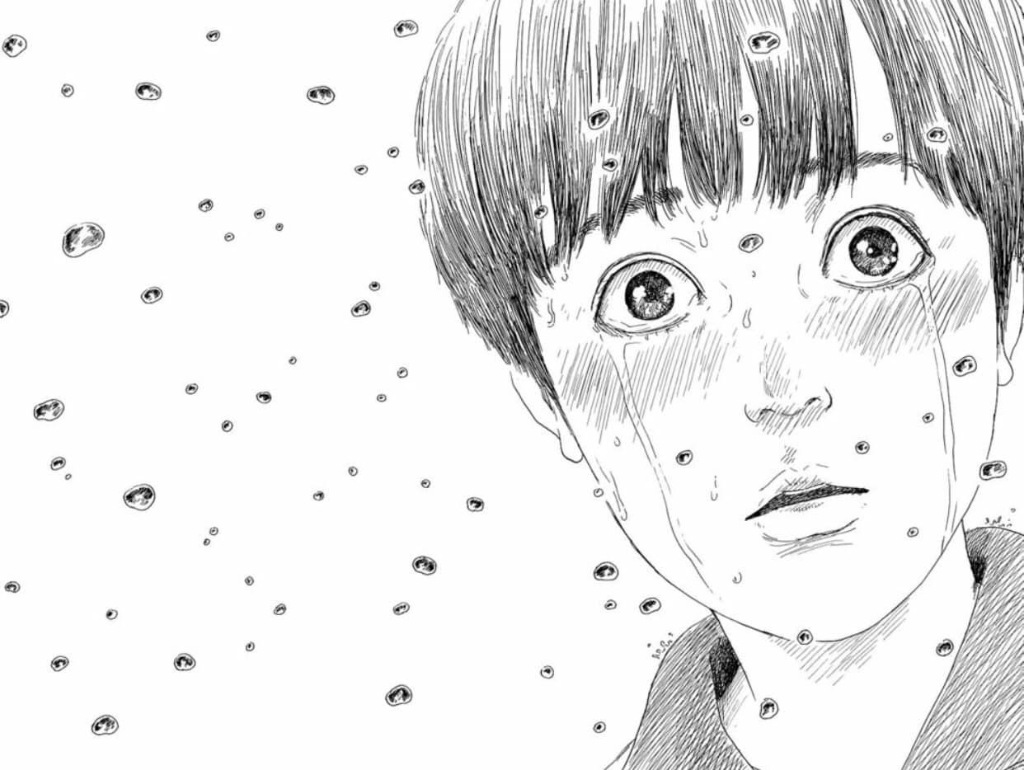
Homunculus — Hideo Yamamoto
A homeless man agrees to experimental trepanation surgery — a hole drilled into the skull — and afterwards begins perceiving people around him as distorted visual representations of their hidden psychological states. The premise sounds clinical. The execution is not. Homunculus is one of the stranger reads on this list, and one of the more rewarding ones if you stay with it.
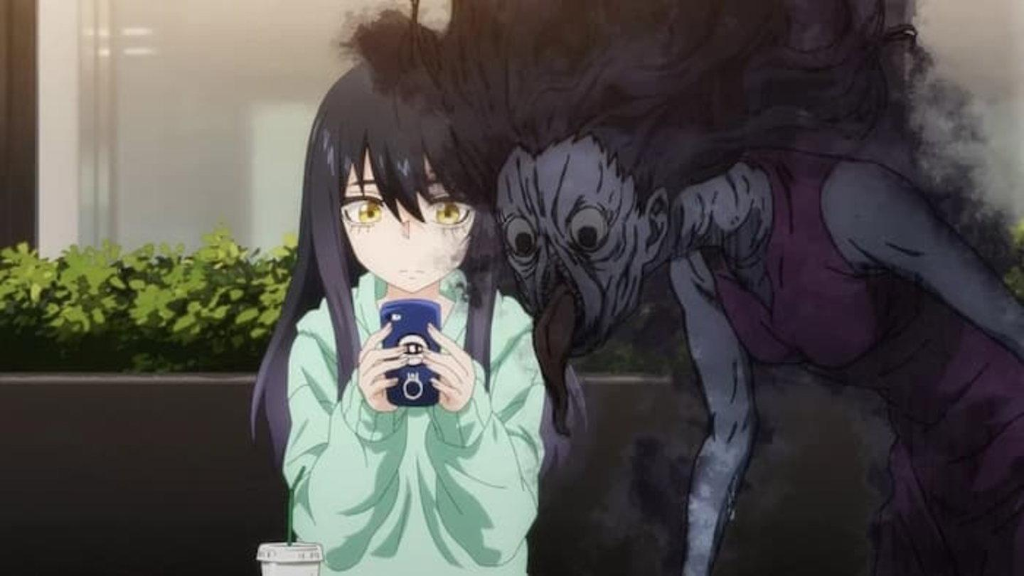
Mieruko-chan — Tomoki Izumi
Different in tone from everything else here — there's even dark humor in places — but the monster designs are genuinely some of the most creative and unsettling in modern manga. The central mechanic (a girl who can see horrifying entities but survives by pretending she can't) creates a very specific kind of sustained dread. Worth it.
Where to Read All of This Legally
The Viz Manga monthly subscription is genuinely the best option if you want to explore broadly. At ₹165 for a month, you can read Uzumaki, Shiver, Gyo, and Tomie before the billing cycle ends.
A Note on Indian Horror Visual Storytelling
The conversation around horror manga almost exclusively centers Japan, which makes sense historically. But there's a parallel tradition of Indian supernatural folk horror in comics and visual storytelling that almost no one talks about in the same breath — and it deserves to be.
The structural logic of Indian folk horror and Japanese horror is closer than most people realize. Both treat the supernatural as earned, not random. There's no arbitrary haunting — there's a debt, a transgression, a territorial violation that brings consequence. The dread in both traditions comes from the same place: the sense that something in the natural order has been disturbed, and that disturbance has a cost.
ZealPlane's native horror collection comes from this tradition. If Ito's atmospheric slow-burn appeals to you, it's worth exploring what Indian artists working in the folk horror space have built. It's available in the reader on the platform.
Use October
Four weeks. Here's one way to run it:
- Week 1 — Read Shiver. One story per night. Don't rush them.
- Week 2 — Read Uzumaki. One volume every two evenings. The pacing matters.
- Week 3 — Watch the anime episodes. Go back to the corresponding manga chapters after each one. The differences are interesting.
- Week 4 — Pick your next entry based on what got to you most. If the body horror landed hardest, go to Gyo. If the psychological disintegration was what stayed, go to Blood on the Tracks. If you want more of the short story format, Smashed is waiting.
The stories that are still with you in November? Those are the ones that worked.
Featured Original Indian Indie Comics on ZealPlane
Explore original indie comics available free to read online:
Trending Indie Webcomics & Manga
- Read Chullu aur Lootera Bhoot online free
- Read My most favorite gags of Guddu online free
- Read Chullu aur Khadoos uncle online free
- Read Animocity Review online free
- Read When horror meets humour online free
- Read THE GIRL INSIDE THE CUPBOARD online free
- Read वज्रयोद्धा By Magha Studio online free
- Read Read 'GHOST IN THE CROWD' by Prince Ayush online free
Latest Pop Culture & Comic News
- One Piece Chapter 1195 Spoilers: Release Date, Global Schedule, and Early Elbaph Hints
- Are Demon Slayer's Breathing Techniques Actually Real — Or Just Visual Flair?
- Spider-Man Is Doing Luffy's Gear 2 Pose, and Fans Are Rightfully Losing It
- Spider-Man Is Doing Luffy's Gear 2 Pose, and Fans Are Rightfully Losing It
- The Ultimate Webtoon Canvas Size & Slicing Guide (2026): How to Format, Slice, and Publish Without Quality Loss
- Beyond Squid Game and Alice in Borderland: 5 Death Game Stories That Actually Get Under Your Skin