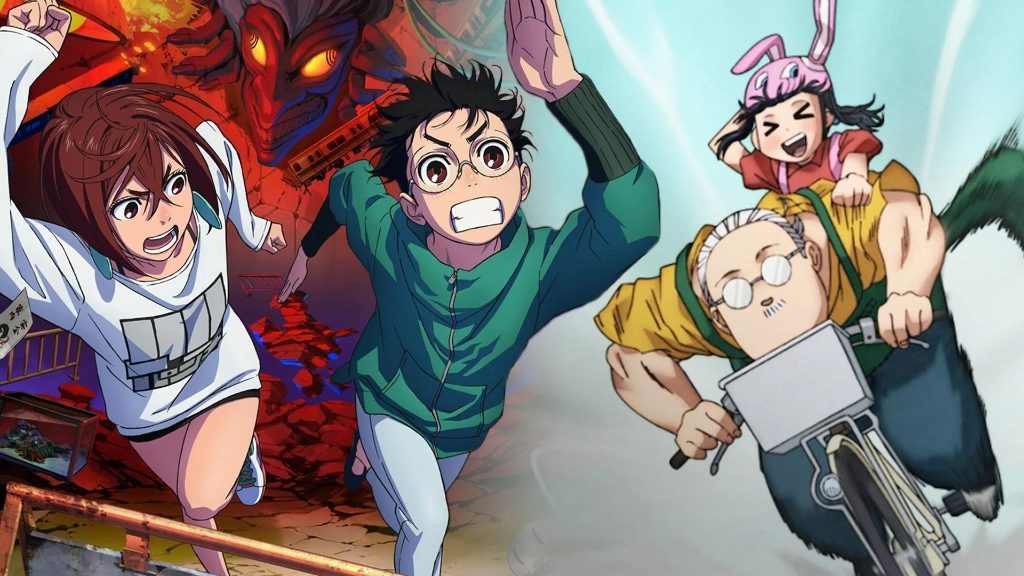
Over the past eighteen months, Indian anime and manga search trends have undergone a clear generational turnover. While legacy giants like One Piece and Jujutsu Kaisen established the foundation for physical tankōbon sales across Delhi, Mumbai, Kolkata, and Guwahati, two modern Shueisha powerhouses—Yuto Suzuki's Sakamoto Days (published in Weekly Shōnen Jump) and Yukinobu Tatsu's Dandadan (serialized digitally in Shōnen Jump+)—have captured the weekly reading habits of fans looking for kinetic action choreography and genre-bending visual storytelling.
Yet thousands of viewers who finished the recent Netflix and Crunchyroll anime seasons face the exact same dilemma: where does the anime adaptation stop, which manga chapter picks up the story without spoilers, and why do veteran manga readers insist that both series look dramatically better on the printed page than in motion?
Below is the complete, spoiler-free chapter conversion blueprint for both titles, paired with a sequential art breakdown of why Suzuki's weapon choreography and Tatsu's double-page horror spreads push the physical limits of comic paneling.
Header Image Credit: Dandadan © Yukinobu Tatsu / Shueisha, Science SARU; Sakamoto Days © Yuto Suzuki / Shueisha, TMS Entertainment.
1. Quick Reference Matrix: Anime-to-Manga Chapter & Volume Cutoffs
If you want to jump straight from the latest anime season finales into the manga without re-reading adapted arcs—or if you want to buy the exact physical VIZ Media tankōbon volume in India—use this verified conversion table:
| Series & Milestone | Last Adapted Manga Chapter | Exact Chapter to Start Reading | Corresponding Tankōbon Volume | Current Serialization Status | Official Legal Platform in India |
|---|---|---|---|---|---|
| Sakamoto Days (Post-Season 1 Part 1 / Cour 1) | Chapter 37 (Volume 5) | Chapter 38 (Start of the Death Row Prisoners Arc) | Volume 5 (Mid-volume) / Volume 6 | Ongoing Weekly (Chapter 281+, 28+ Volumes released) | MANGA Plus by Shueisha (Free first read) & VIZ Shonen Jump App |
| Sakamoto Days (Post-Season 1 Part 2 / Full S1 Finale) | Chapter 75 ("Damn Telepath") | Chapter 76 (Start of the JCC Infiltration Arc) | Volume 9 (Chapters 71–79) | Ongoing Weekly (Chapter 281+, Sundays at 8:30 PM IST) | MANGA Plus by Shueisha & VIZ Media |
| Dandadan (Post-Season 1 Finale) | Chapter 33 / early pages of Chapter 34 (Cursed House Arc) | Chapter 34 | Volume 5 (Chapters 33–40) | Ongoing Weekly (Chapter 251+, Mondays at 8:30 PM IST) | MANGA Plus by Shueisha & VIZ Shonen Jump |
| Dandadan (Post-Season 2 Finale) | Chapter 71 (End of the Kaiju Arc cliffhanger) | Chapter 72 (Transition into the Space Globalists buildup) | Volume 9 (Starts mid-volume at Ch. 72) | Ongoing Weekly (Chapter 251+) | MANGA Plus by Shueisha & VIZ Shonen Jump |
2. Sakamoto Days: Why Chapter 76 (The JCC Infiltration Arc) Is Where the Real Masterpiece Begins
When TMS Entertainment adapted Sakamoto Days for Netflix, the biggest debate inside the manga community centered on visual translation. While the anime captures the lighthearted slice-of-life humor of Taro Sakamoto's convenience store rules, the manga undergoes a dramatic tonal and artistic shift starting around Chapter 55 (The JAA Exam) and accelerating at full throttle in Chapter 76 (The JCC Infiltration Arc).
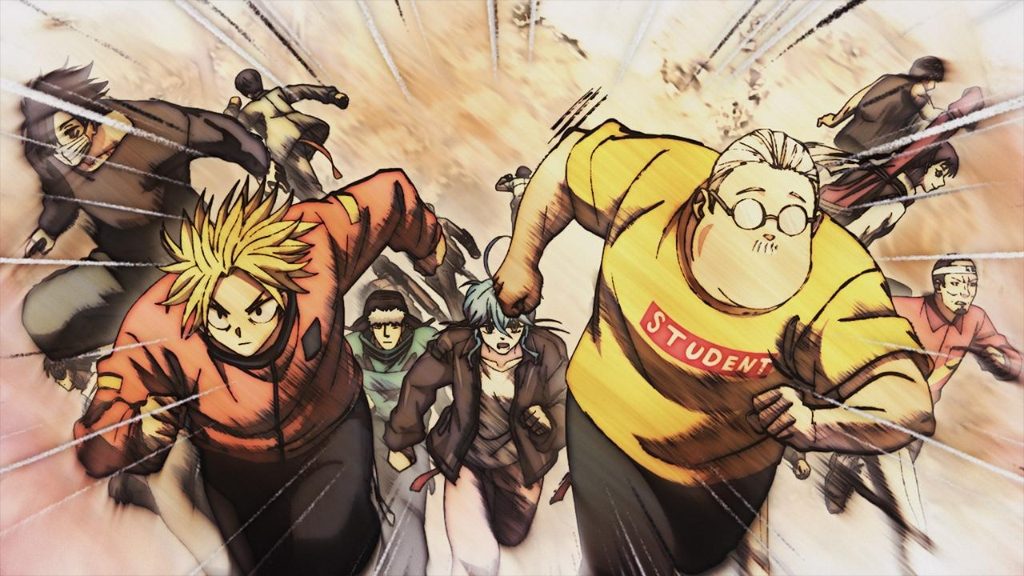 Taro Sakamoto, Shin, and the assassin candidates during the high-velocity JCC entrance exams in Sakamoto Days (Image Credit: © Yuto Suzuki / Shueisha, TMS Entertainment).
The Sequential Art Secret: How Yuto Suzuki Draws "Invisible Frames"
From a comic creator's perspective, Yuto Suzuki is widely regarded by fellow mangaka as having the cleanest spatial action choreography in Weekly Shōnen Jump since Akira Toriyama's prime Dragon Ball era. Here is why his fight scenes work so effortlessly on a static page:
- Gutter-Driven Motion (The Jackie Chan Effect): In animation, 24 frames per second fill in every micro-movement between a punch and an impact. In manga, the reader's brain bridges the gap across the panel gutter (the white space between two frames). Suzuki places characters at the extreme trailing edge of Panel A and the extreme leading edge of Panel B, using environmental props—barcode scanners, subway handrails, broken glass, or rotary blades—as visual vectors that pull your eye diagonally down the page.
- Zero Speed-Line Clutter: Many action artists hide stiff anatomy behind dense walls of background speed lines. Suzuki does the opposite: during high-level Order assassinations (involving Nagumo, Shishiba, Osaragi, or Takamura), he strips the background down to stark architectural geometry and lets black ink splashes and debris shards show the exact trajectory of the weapon.
- What Anime Viewers Missed in Chapters 1–75: Even if you watched all of Season 1 (which ends at Chapter 75 as Shin and Sakamoto prepare to go undercover at the Japan Clear Creation assassin academy), the anime skipped several early episodic slice-of-life chapters—including the early Hijacked Bus sequence and Sakamoto and Aoi's date chapters—that flesh out the family dynamic before Slur (Uzuki) escalates the war against the JAA.
- Where the Manga Is Right Now (Chapter 281+): With over 200 unadapted chapters waiting for you after Chapter 76, you will experience the JCC Infiltration Arc, the deeply emotional Sakamoto's Past Flashback Arc (featuring young Sakamoto, Nagumo, and Rion Akao), the Bangkok Arc, and the massive Assassin Exhibition of the Century (Museum Arc) long before they ever reach streaming screens.
3. Dandadan: Picking Up at Chapter 72 and the Genius of Yukinobu Tatsu’s Spreads
Unlike Sakamoto Days, Science SARU's anime adaptation of Dandadan is universally praised for its experimental color palettes, kinetic camera rotation, and faithful 1:1 pacing. Season 1 covered Chapters 1 through 33, and Season 2 carried Momo Ayase, Okarun (Ken Takakura), Aira, and Jiji through the conclusion of the Cursed House, Evil Eye, and Kaiju arcs, stopping right at the massive cliffhanger of Chapter 71.
If you start reading at Chapter 72 (inside Volume 9), you step immediately into the aftermath of the giant kaiju suit confrontation and begin the ramp-up toward what manga readers universally consider the pinnacle of the entire series: The Space Globalists Arc (Chapters 74–120).
Why Yukinobu Tatsu’s Double-Page Spreads Defy Digital Screens
Before creating Dandadan, Yukinobu Tatsu worked as a key assistant to Tatsuki Fujimoto (Chainsaw Man, Fire Punch) and Yuji Kaku (Hell's Paradise: Jigokuraku). You can see both mentors in his inkwork, alongside an obsession with Katsuhiro Otomo's (Akira) hyper-detailed cross-hatching and Junji Ito's page-turn horror timing:
- Forced Perspective & Fisheye Distortion: When Okarun invokes Turbo Granny's full-throttle curse, Tatsu switches from standard focal lengths to extreme wide-angle fisheye perspectives. Limbs foreshorten directly toward the reader while background hallways warp inward, creating an unmistakable sensation of G-force velocity on a flat sheet of paper.
- The "Page-Turn Dread" Technique: Whenever an alien fleet or yokai entity manifests in Dandadan, Tatsu constructs a tense five-panel setup on the odd-numbered page that forces you to flip (or swipe) to a full, borderless double-page spread teeming with thousands of hand-drawn pen strokes.
- Horizontal Spreads vs. Vertical Scroll Formatting: Because Dandadan is native to Shōnen Jump+, Tatsu constantly balances traditional horizontal double-page spreads against mobile reading habits. (For independent comic artists studying how traditional horizontal manga pages contrast with vertical 800x1280px webtoon strips, experimenting with canvas ratios in our browser-based ZealPlane Webtoon Slicer is one of the fastest ways to understand how panel flow changes across devices).
4. How to Read Both Series Legally in India (And Why Official Reads Matter)
For Indian readers, accessing both Sakamoto Days and Dandadan without touching low-resolution piracy hubs has never been easier or cheaper:
- MANGA Plus by Shueisha (App & Browser): Shueisha's official global platform offers the first three chapters and the latest three weekly chapters completely free worldwide, including India. Moreover, on the mobile app's First Read feature, ongoing titles frequently allow you to read intermediate chapters (such as Chapter 76 of Sakamoto Days or Chapter 72 of Dandadan) once for free without a paid subscription.
- VIZ Media Shonen Jump App: For roughly ₹199/month, the official Shonen Jump vault unlocks the entire back-catalog of both series in high-resolution digital format, allowing you to toggle between single-page vertical scroll and two-page horizontal book mode so Yukinobu Tatsu's double-page spreads aren't split down the middle.
- Physical Tankōbon Volumes in India: VIZ Media print editions of Sakamoto Days (up through Volume 23+ in English print) and Dandadan are widely stocked across Indian bookstores and verified online retailers—just be sure to check for the official VIZ Media spine logo and crisp paper weight to avoid bootleg reprints.
Whether you are jumping into Chapter 76 of Sakamoto Days to watch Taro Sakamoto and Shin infiltrate the assassin academy, or starting Chapter 72 of Dandadan before the Space Globalists invasion begins, experiencing these two modern classics in their original black-and-white ink format reveals an entire layer of visual storytelling that animation simply cannot replicate. And once you catch up on your weekly Sunday and Monday chapters, check out our own original supernatural action webcomic KARMA on ZealPlane—crafted from the ground up for fans of high-stakes combat and dark mythological lore.
Related Reading
- Solo Leveling: Ragnarok Season 3, The JIN Replacement, and Why the Tapas Shutdown Is a Disaster for Readers: Dive into the major studio shifts and power escalation shaping the modern manhwa landscape.