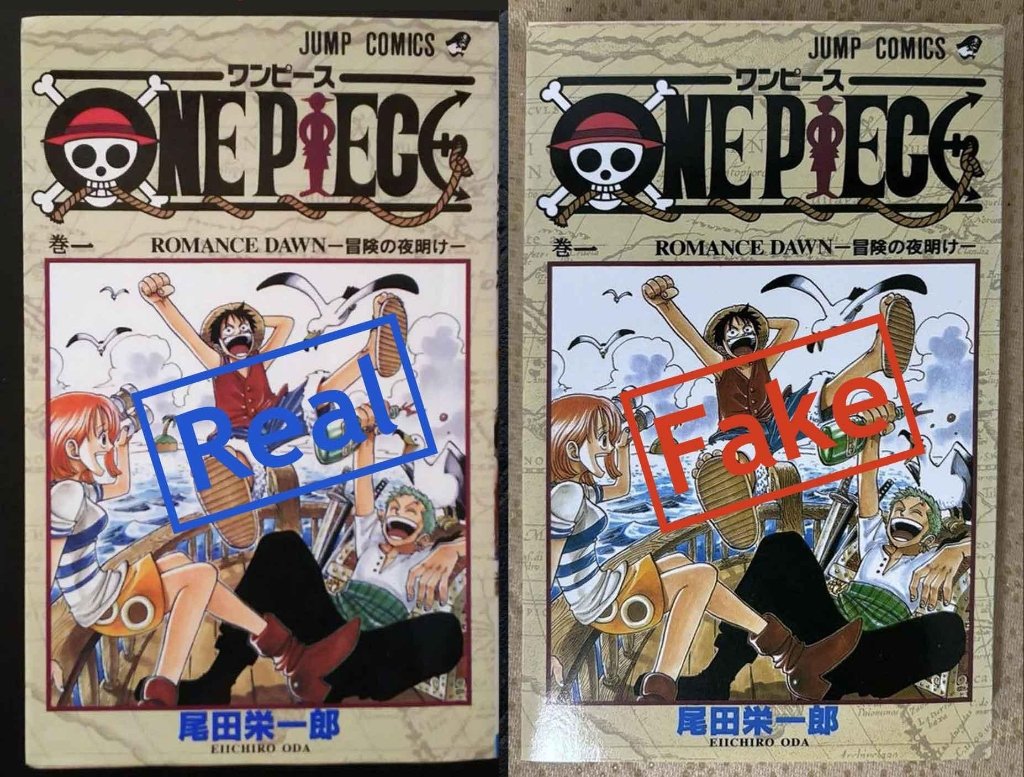
If you have recently started collecting manga in India, you have almost certainly seen popular volumes of Jujutsu Kaisen, Chainsaw Man, or One Piece selling for ₹120 to ₹180 on Meesho, Flipkart, or third-party Amazon listings. At first glance, getting a volume at a 70% discount feels like an unbelievable steal—until the package arrives with pixelated artwork, cut-off speech bubbles, faded grey tones, and pages falling out of the spine on your first read.
India’s anime and manga market has exploded, and alongside official licensing milestones, counterfeit (bootleg) printing has become a rampant issue. Worse, with Kodansha officially printing localized domestic editions in India starting at ₹299, many new collectors are confused about whether a cheaper volume is an authentic domestic Indian print or an illegal pirated photocopy.
Here is the definitive, step-by-step physical inspection guide to spotting fake vs. original manga in India, along with a verified list of trusted Indian sellers and distributors so you never waste your money on a counterfeit volume again.
Quick Comparison: Imported Original vs. Official Indian Print vs. Fake Bootleg
Before inspecting your book, it is critical to understand the three distinct types of manga currently circulating in the Indian market:
| Feature | Imported Original (VIZ / Kodansha US / Yen Press) | Official Indian Print (Kodansha India / Simon & Schuster) | Fake / Bootleg Copy (Meesho / Unverified Sellers) |
|---|---|---|---|
| Typical Price in India | ₹650 – ₹999 | ₹299 – ₹399 | ₹99 – ₹199 |
| Paper Quality | Off-white / creamy, 75–80 GSM, zero ink bleed | Clean off-white domestic paper, minimal bleed | Stark white 55 GSM photocopy paper, heavy ink bleed |
| Spine & Publisher Logo | Crisp VIZ, Kodansha, or Shonen Jump logo | Official Kodansha India branding & Indian MRP sticker | Missing publisher logo or fake stamps (e.g. “TR Media”) |
| Panel Cropping | Full artwork with generous inner & outer gutter margins | Full artwork calibrated to Japanese tankobon dimensions | Cropped edges, severed speech bubbles, severe gutter loss |
| Binding Durability | Flexible commercial glue; opens flat without cracking | Standard commercial paperback spine binding | Brittle local glue; pages detach and fall out rapidly |
Important Note for Buyers: Do not mistake a ₹299 Kodansha India edition for a fake! If you want to check which series have verified domestic releases and retail pricing across the country, check our complete breakdown of the Kodansha India Manga Lineup, Price & Release Guide.
6 Physical Tests to Spot Fake vs. Original Manga
The moment your courier parcel arrives, execute these six physical checks before peeling off return labels or discarding the seller packaging:
1. The Spine & Publisher Logo Check (The Dead Giveaway)
Flip the manga sideways and look closely at the upper and lower portions of the spine. Every authentic English manga carries the official publisher’s trademark emblem—such as VIZ Media, Shonen Jump, Kodansha, Yen Press, Dark Horse, or Seven Seas. Text alignment is razor-sharp, font kerning is perfectly centered, and the spine thickness matches the page count exactly. Counterfeiters routinely delete official trademarks to avoid automated intellectual property takedowns, leaving an empty, awkward blank gap where the logo belongs. On Indian bootlegs, you will also frequently spot invented counterfeit stamps like “TR Media” or distorted spine text that wraps sloppily onto the front cover.
2. Paper Color & Ink Bleed Test (Creamy vs. Pure White)
Open the book to a dialogue-heavy page and hold it under standard room lighting. Authentic publishers use uncoated, slightly creamy/off-white book paper (typically 70–80 GSM bulk paper). This specialized stock absorbs dense black ink cleanly without allowing it to soak through to the reverse panel. Indian bootleggers print unauthorized scanlations on stark-white, heavily bleached A4 bond paper (55–60 GSM). Because the paper is paper-thin and industrial grade, dark shadows and screentones from the back of the leaf bleed through prominently, making reading visually exhausting.
3. Artwork Sharpness & Screen-Tone Moiré Patterns
Inspect dark shaded areas, character hair, and grey gradient backgrounds closely under a magnifier or good phone camera. Authentic manga is printed directly from high-resolution digital master files licensed from Japanese studios. Shaded textures consist of microscopic, uniform dot arrays (halftone screen tones). Counterfeit editions are printed from compressed web JPEGs ripped from piracy scanlation sites. When blown up and printed, grey areas break down into wavy, cross-hatched distortion grids (moiré patterns), and small sound effects (SFX) or furigana text appear blurry and pixelated.
4. Gutter Loss & Severed Speech Bubbles
Open a dramatic two-page action spread flat on a desk. Authentic printings incorporate safety gutter margins (the inner crease where pages bind into the glue), ensuring dialogue bubbles and character expressions remain completely readable without forcing the spine open. Pirate printers lack official layout plates; they crop raw scans unevenly. As a result, inner dialogue disappears into the glued gutter, while outer panel edges get sliced off by blunt paper guillotines—frequently chopping dialogue bubbles in half.
5. The Copyright Page & ISBN Verification
Turn to the final two pages of the book (remembering that authentic manga reads right-to-left, so this is situated on the left-hand side). An authentic volume features a comprehensive copyright block crediting the original mangaka, original Japanese publisher (Shueisha, Kodansha, Shogakukan, Square Enix), English translation staff, lettering credits, 13-digit ISBN barcode, and country of manufacture (e.g. Printed in the USA, Italy, Canada, or India). Counterfeits either omit the copyright page altogether, feature misspelled publisher credits, or print an invalid ISBN that resolves to an unrelated textbook when searched on isbnsearch.org.
6. Cover Lamination & Weight Check
Run your fingers across the front and rear covers. Authentic manga covers feature smooth matte, gloss, or spot-UV lamination designed to withstand repeated handling without corner delamination. Counterfeit covers feel like thin, sticky photographic paper mounted onto flimsy cardboard. A fake volume is also noticeably lighter in hand due to low-GSM paper stock, yet stiffer to open because of cheap, brittle industrial glue.
Amazon, Flipkart & Meesho: Where Are Fakes Coming From?
Understanding how Indian e-commerce marketplaces function is your best defense against purchasing a counterfeit book:
- Meesho (99% Counterfeit Rate): Virtually all manga listed on Meesho—particularly ₹899 box sets and ₹120 single volumes—are unauthorized domestic reprints produced in unorganized print clusters. Avoid buying manga on Meesho under all circumstances.
- Flipkart (High Risk): Unless the seller is an established retail book distributor, the vast majority of discounted manga listings on Flipkart originate from wholesale pirated book markets in Delhi (Daryaganj, Nai Sadak) and Mumbai.
- Amazon India (Mixed – Seller Name Dictates Authenticity): Amazon pools inventory from multiple sellers on the same product page. Clicking “Buy Now” without verifying the “Sold by” line frequently pairs buyers with third-party counterfeiters who undercut official pricing by ₹200.
Verified List of Trusted Manga Sellers in India (2026)
To ensure 100% genuine copies that support the original creators and mangaka, purchase exclusively through these verified vendors:
- Bookswagon (bookswagon.com): Considered the gold standard for Indian manga and graphic novel collectors. They import directly from international publishers, ship books in rigid cardboard packaging, and maintain a strict zero-counterfeit policy.
- Cocoblu Retail (Amazon India): Amazon India’s primary authorized book distributor. Stock sold directly by Cocoblu Retail represents genuine international imports or authorized domestic editions from Simon & Schuster India and Penguin Random House India.
- Trans Infopreneur Inc (Amazon India): One of India’s most respected specialty book importers with authentic VIZ Media, Kodansha, and Yen Press inventory.
- uRead-Store & Atlantic Publishers: Long-standing authorized book dealers with consistent stock of mainstream Shonen, Seinen, and Shojo volumes.
- Crossword Bookstores (Online & Retail Stores): Physical branches across major Indian metros supply authenticated stock directly from licensed Indian publishing distributors.
What to Do If You Received a Fake Manga on Amazon or Flipkart
If you have already received a parcel and it failed the physical tests outlined above, act immediately before your return window expires:
- Capture Evidence Photos: Take high-resolution photos of the missing spine logo, bleed-through paper, cropped speech bubbles, and the back ISBN page.
- Initiate an Immediate Return: Select “Item defective or counterfeit product” in your order dashboard. Do not accept a partial refund or replacement from unverified sellers.
- Leave a Direct Seller Review: Document the exact seller name in a review with photos so fellow Indian collectors are alerted to the counterfeit storefront.
Looking for verified, high-quality digital platforms to read your favorite ongoing series legally while waiting for physical volumes to arrive? Check out our curated directory of the Best Sites to Read Comics & Manga Online Legally in 2026.
Frequently Asked Questions (FAQ)
Is a ₹300 manga on Amazon India original or fake?
If the manga is published domestically by Kodansha India (such as Attack on Titan, Blue Lock, or Vinland Saga) and sold by verified distributors like Cocoblu Retail, a ₹299 to ₹399 price is 100% genuine. However, if an imported VIZ Media title like Jujutsu Kaisen or Chainsaw Man is listed below ₹350, it is almost certainly a counterfeit bootleg.
Why are manga volumes so cheap on Meesho?
Manga volumes on Meesho cost ₹120 to ₹180 because they are unauthorized, locally photocopied bootlegs printed on substandard paper without paying licensing royalties to Japanese mangaka or publishing houses.
How can I check if a manga ISBN is genuine?
Locate the 13-digit ISBN barcode on the back cover and cross-check it against the copyright page inside the book. Entering that number into isbnsearch.org should match the exact title, volume number, and publisher specifications.
Does buying fake manga hurt the original creators?
Yes. Counterfeit manga operations keep 100% of profit margins without remitting royalties to mangaka, translators, or editorial teams, directly suppressing future official anime seasons and licensed print distribution in India.