1. Origin & Culture
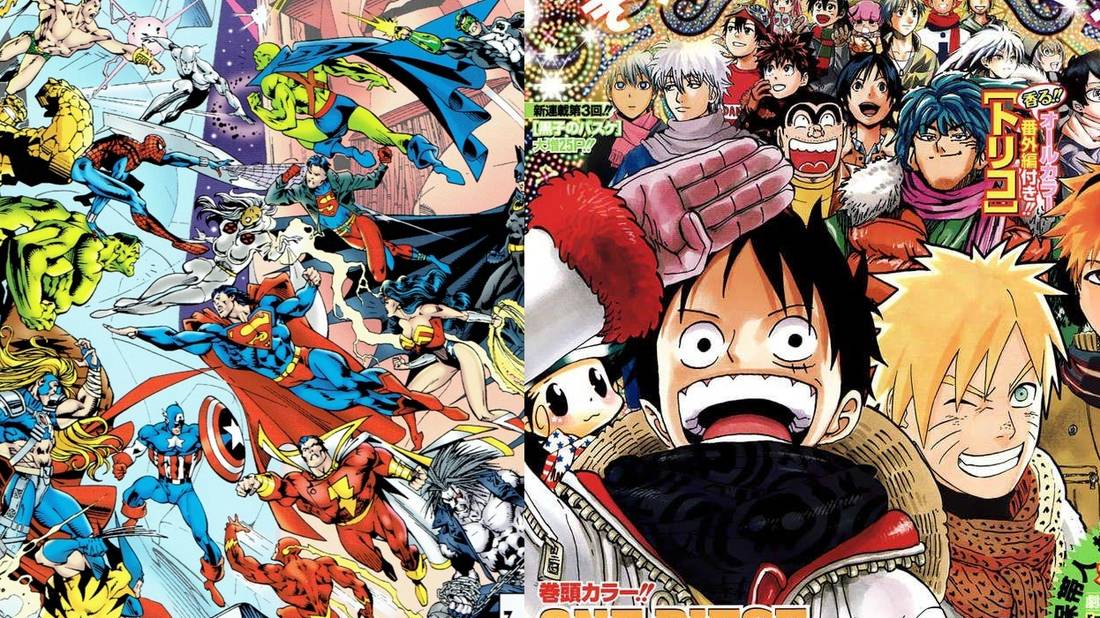
- Comics are deeply rooted in Western culture, especially in the United States and Europe. Think Marvel, DC, and Archie — they reflect Western ideals, humor, and heroism.
- Manga, on the other hand, is a product of Japanese culture. It brings a mix of traditional values, everyday life, and over-the-top fantasy. From Naruto to Attack on Titan, manga blends cultural depth with intense storytelling.
2. Art Style
- Comics usually come in full color, with bold linework and detailed shading. They often aim for realism or dynamic action panels.
- Manga is typically black and white, focusing heavily on expressions, speed lines, and mood. The simplicity allows for more frequent releases and a unique charm.
3. Storytelling & Structure
- Comics are often short, with stories spread across multiple issues. Superhero universes can get complex, with multiple timelines and reboots (looking at you, DC Crisis events).
- Manga usually follows a long-running storyline from start to finish, often written and illustrated by the same creator, giving it consistency in tone and vision.
4. Reading Style
- Comics: Left to right.
- Manga: Right to left. This difference alone can be a hurdle for new readers — but manga fans swear by the original format.
5. Fan Culture
- Comic Fans often dive deep into superhero lore, cosplay as Batman, Spider-Man, or Wonder Woman, and love debating Marvel vs DC.
- Manga Fans embrace Japanese pop culture, cosplay as anime/manga characters, and often blend into anime conventions, making it a whole lifestyle.
6. Popularity & Global Reach
- Comics rule in the West, but manga has exploded worldwide thanks to anime adaptations. Many readers start with anime and move to manga to catch up with the story.
So… Which is Better?
There’s no ultimate winner. If you love fast-paced, colorful action with iconic heroes, comics are your playground. If you prefer emotional depth, long-form storytelling, and a unique cultural experience, manga might be your thing.In the end, both formats enrich the world of storytelling — and there’s nothing stopping you from enjoying both. After all, Batman and Naruto could probably have one heck of a crossover.Production Pipelines and Author Ownership: Marvel/DC vs Mangaka
A crucial structural difference between Western comics and Japanese manga lies in intellectual property ownership and creative control. In mainstream American comics (dominated by Marvel and DC), characters like Spider-Man and Batman are corporate-owned properties. Writers and artists operate on work-for-hire contracts, leading to frequent reboots, multiversal retcons, and shifting creative visions across decades. In contrast, Japanese manga is traditionally written and illustrated by an individual creator (*mangaka*), supported by assistant artists and an editor at publishing houses like Shueisha or Kodansha. This singular authorship ensures a definitive artistic vision, character mortality, and a conclusive beginning, middle, and end.
Visual Deconstruction: Panelling, Decompression, and Pacing
Western comics traditionally prioritize dialogue-dense panels with full-color rendering, dynamic cross-hatching, and intricate environmental backgrounds. The reading flow relies on left-to-right western composition. Japanese manga, read right-to-left, masters the art of 'decompression' and aspect-to-aspect transitions. A battle in manga can span ten pages without a single word of spoken dialogue, relying purely on speedlines, emotive close-ups, and kinetic sound effects (*onomatopoeia*) to convey speed and emotional tension.
The Global Market Verdict in 2026
While American superhero comics retain cultural dominance through multibillion-dollar Hollywood adaptations, manga has completely dominated digital and physical print sales globally. With accessible entry prices, serialized black-and-white formats, and comprehensive genres catering to every demographic—from culinary dramas to psychological horror—manga has become the preferred visual reading medium for Gen Z and millennial readers across India, Southeast Asia, and the Americas.
🎨 Studio Craft & Visual Forensics: The Indian Indie Sequential Art Pipeline
At ZealPlane Studio, analyzing the technical evolution of Indian comic publishing highlights an inspiring artistic renaissance. For decades, Indian comic artists were constrained by coarse newsprint presses, low-DPI screen reproduction, and 4-color CMYK ink bleed that often obscured fine anatomical line work. In the modern digital era, creators are synthesizing rich classical Indian visual traditions with world-class digital graphic novel workflows.
Notice the intentionality in contemporary Indian indie panelling: creators blend traditional European comic realism with vertical webtoon scrolling ergonomics. Devanagari lettering is no longer clumsily pasted over English speech balloons; instead, custom vector Indian typography is organically drawn into the composition, enhancing auditory phonetics and cultural immersion for readers across tier-1 and tier-2 cities alike.
| Publishing Dimension | Vintage 1990s Newsprint Digest | Modern Indian Indie Comic (ZealPlane) | Reader Advantage |
|---|---|---|---|
| Art Resolution & Inking | 72–150 DPI newsprint printing; frequent ink bleed. | 300+ DPI lossless vector linework and clean digital tones. | Pristine zoom clarity on OLED mobile screens and tablets. |
| Distribution & Access | Physical railway bookstalls, out-of-print scarcity. | Instant zero-paywall in-browser reader on ZealPlane. | Global 24/7 legal reading access without shipping friction. |
| Creator Economics | One-time work-for-hire fee; 0% copyright retention. | 100% creator IP ownership + direct UPI / micro-tips. | Empowers creators to build sustainable, independent careers. |
❓ Frequently Asked Questions (FAQ)
Where can I read original Indian indie comics and webcomics online?
You can read original Indian indie comics, graphic novels, and Hindi webcomics for free on ZealPlane (zealplane.com). The platform hosts acclaimed series like Karma, PRANA, Chullu, and Sando with zero paywalls and full creator attribution.
How can independent Indian artists self-publish and format their comics?
Artists can register on ZealPlane to publish unlimited chapters while retaining 100% copyright ownership. Use ZealPlane’s free in-browser Webtoon Slicer Tool (/tools/webtoon-slicer) to split continuous digital artwork into standardized mobile panels in seconds.
Why is Indian indie comic storytelling gaining global attention in 2026?
Indian comic creators are moving beyond generic imitation to craft deeply authentic stories rooted in regional folklore, social realism, and rich mythological philosophy. Combined with modern digital webtoon formatting, these stories offer global readers fresh, compelling narrative perspectives.
Trending Indie Webcomics & Manga
- Read Chullu aur Lootera Bhoot online free
- Read My most favorite gags of Guddu online free
- Read Chullu aur Khadoos uncle online free
- Read Animocity Review online free
- Read When horror meets humour online free
Latest Pop Culture & Manga News
- Where Do Webtoon Creators Actually Make Money in 2026?
- Demon Slayer Watch Order (2026): How to Watch Every Season & Movie Without Falling for Recap Traps
- How to Tell Fake vs Original Manga in India: Amazon & Meesho Bootleg Guide (2026)
- One Piece 1198: Luffy’s Dangerous Zoan Risk
- Read Sakamoto & Dandadan: Post-Anime Guide