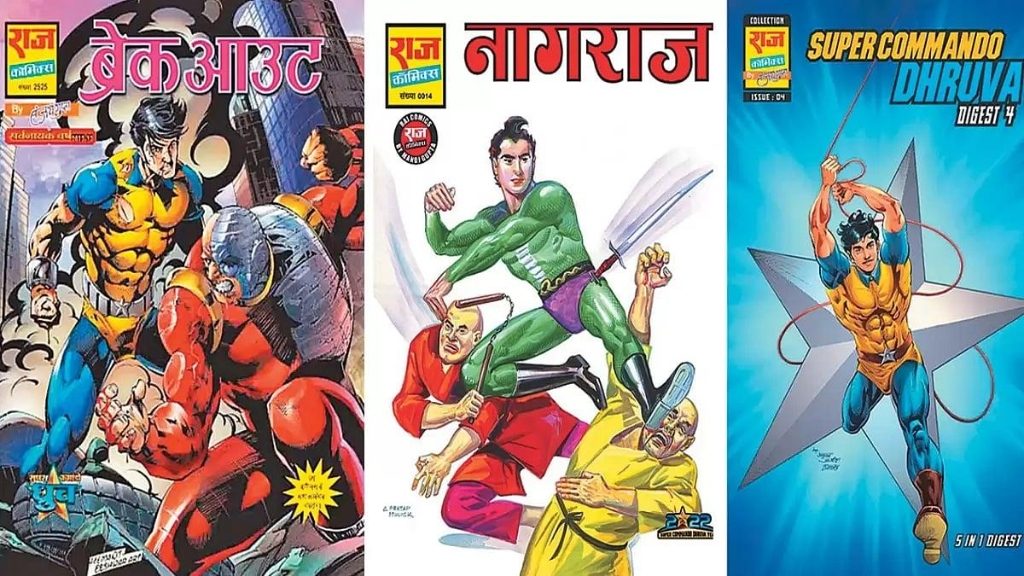
We all remember how we got our first comic book. For anyone who grew up in India during the eighties and nineties, that memory almost certainly smells like diesel fumes, sweet station chai, and cheap newsprint on a crowded railway platform.
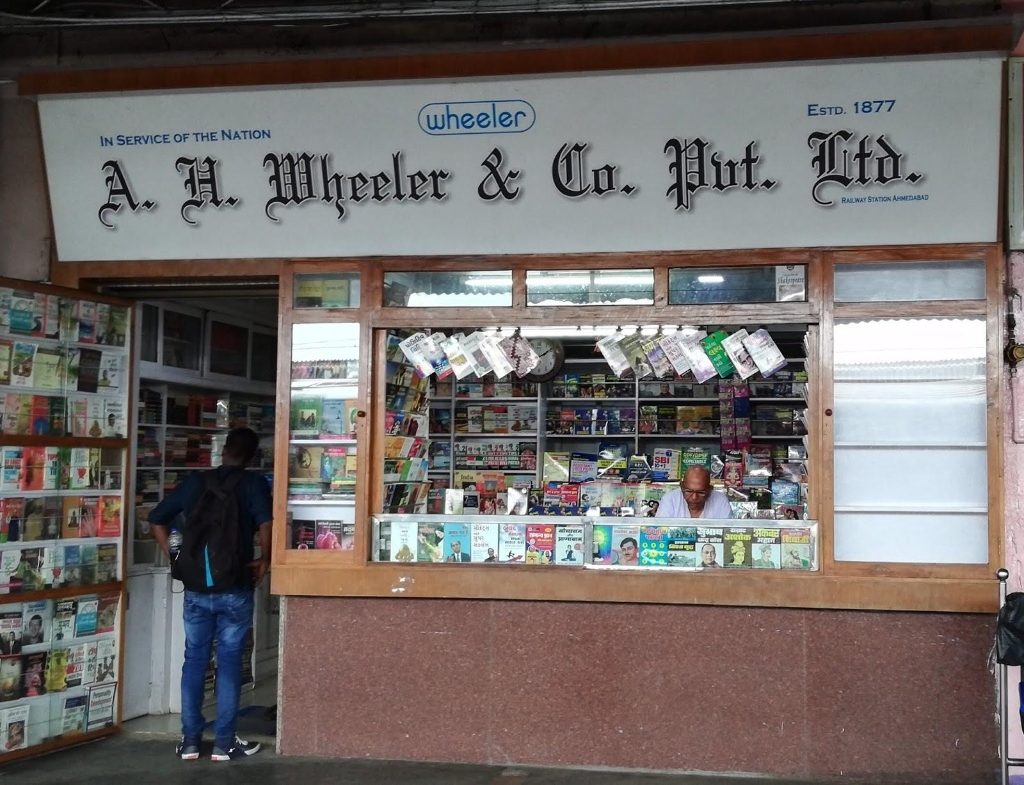
Visiting the local railway station back then was rarely just about boarding a train. In small towns and tier-two cities, school kids and college students made dedicated evening cycling trips to the station purely to inspect the wire spinner racks at the A.H. Wheeler stall. You would stand on the platform, waiting for the passenger train from Delhi or Meerut to drop off the fresh bundles, eagerly asking the stall manager: "Bhaiya, Nagraj ki nayi comics aayi kya?"
That simple question powered one of the largest print entertainment industries in Asia.
When Bollywood and Comics Shared the Same Cultural Stage
Comics in that era were not a boutique collector hobby; they were the dominant mass-market visual medium for Indian youth. Long before satellite television became ubiquitous and decades before affordable 4G smartphones arrived, Indian comic publishers commanded print circulations that rivaled the biggest publishing houses in Europe and Japan.
The market operated across two primary, complementary sectors: institutional children's periodicals and vernacular superhero pulp.
On the institutional side, India Book House (IBH) had pioneered cultural graphic storytelling in 1967 with Anant Pai's Amar Chitra Katha, followed in 1980 by the beloved children's digest Tinkle. Concurrently, Bennett, Coleman & Co.'s Indrajal Comics (1964–1990) introduced Lee Falk's The Phantom and Mandrake the Magician to millions in Hindi, English, and regional languages. Soon after, Diamond Comics—anchored by cartoonist Pran Kumar Sharma's legendary creations Chacha Chaudhary, Sabu, Billoo, and Pinki—commanded combined monthly print circulations exceeding 450,000 to 500,000 copies across Hindi, English, Bengali, and Marathi editions.
In the vernacular superhero pulp sector, Raj Comics (founded in 1986 by Rajkumar Gupta and sons Sanjay, Manoj, and Manish Gupta in Delhi) revolutionized action comics. Characters like Nagraj (introduced in 1986 with art by veteran Pratap Mulick), Super Commando Dhruva (created in 1987 by Anupam Sinha), Doga, and Parmanu became household names across the Hindi belt. Landmark crossover special editions (*Visheshanks*) such as Nagraj Aur Super Commando Dhruva (1991) and Nagraj Aur Bugaku (1993) achieved initial print runs between 250,000 and 400,000 copies, with cumulative lifetime multi-year reprints crossing well over a million copies.
Mainstream culture and comic publishing were intimately intertwined. In 1983, India Book House's Star Comics imprint published The Adventures of Amitabh Bachchan (popularly known as the Supremo series; in Hindi, Kisse Amitabh Ke). Conceived and edited by Movie magazine editor Pammi Bakshi—who pitched the concept to Bachchan on the Goa sets of Pukar following his recovery from the 1982 Coolie accident—the superhero alter-ego featured Bachchan as an actor by day who fought crime with a sonic weapon and his pet falcon Shaheen. Scripted by Pammi Bakshi with initial consultancy from poet-filmmaker Gulzar and drawn by master illustrator Pratap Mulick, the series demonstrated that comic books were a primary pop-culture asset capable of hosting the nation's biggest superstar.
Crucially, circulation numbers told only part of the story. Because a single 32-page comic book priced at ₹5 to ₹10 was shared across school classrooms or rented out by neighborhood corner stores and tea stalls for 25 to 50 paise per day, industry researchers estimate a pass-along readership multiplier of 12 to 18 readers per copy. A 300,000-copy print run frequently reached upwards of four to five million young readers.

Why the Traditional Newsprint Ecosystem Collapsed
Between 1998 and 2015, this high-volume mass-market infrastructure experienced a systemic breakdown driven by three interconnected structural shocks:
1. The Loss of Railway Bookstalls and Neighborhood Rental Networks
For over a century, A.H. Wheeler & Co. (founded in 1877 at Allahabad Railway Station by Émile Moreau and Indian partners) held exclusive sole-selling rights across hundreds of stations across the Northern, Eastern, and Central railway zones. Wheeler stalls functioned as the country's default physical pop-culture browsing gallery.
In 2004, the Ministry of Railways revised its commercial bookstall policy (Commercial Circulars No. 19 and 38 of 2004), challenging Wheeler's automatic monopoly renewals. While litigation protracted the transition for over a decade (e.g., A.H. Wheeler & Co. v. Union of India, Allahabad High Court, 2005), the decisive shift arrived with the Railway Board's 2017 Multi-Purpose Stall (MPS) Policy. This policy formally permitted traditional bookstalls to convert reading racks into high-margin packaged food, beverages, and FMCG retail. Wire spinner racks were dismantled to make room for mineral water and potato chips. Simultaneously, urban redevelopments and digital transitions wiped out neighborhood corner rental shops, severing the physical touchpoint where children discovered monthly comic books.
2. The Industrial Paper Price Trap & Offset Thresholds
Commercial web offset printing relies entirely on massive unit volumes to amortize fixed prepress plate setup costs. In the 1980s, producing 250,000 copies of a 32-page newsprint comic allowed unit printing costs to stay below ₹2.50 to ₹3.20. Even after offering a 40% wholesale and railway trade discount, the publisher retained a healthy unit margin of ₹2.00 to ₹2.50 on a ₹10 cover price.
As circulation numbers declined under competition from 24-hour cable television (Cartoon Network launched in India in 1995, followed by regional kids' animation channels), publishers were trapped in a vicious inflationary spiral. When print runs dropped below 30,000 copies, unit offset plate costs multiplied exponentially. Publishers raised cover prices from ₹15 to ₹40, and eventually beyond ₹80 in the late 2000s for expanded glossy editions. Adjusted for inflation, a ₹10 comic in 1989 equates to roughly ₹95–₹115 in 2026 purchasing power—yet modern single issues disappeared entirely, unable to survive on impulse pocket money.
3. The 2021 Corporate Partition of Raj Comics
The internal operational fracture of Raj Comics in 2021 dealt a final blow to unified market distribution. The founding legacy divided into three distinct operational entities:
- Raj Comics by Sanjay Gupta (RCSG): Focused on new universe continuities (such as Sarvanayak expansions), original story arcs, and curated collector hardcovers.
- Raj Comics by Manoj Gupta (RCMG): Spearheaded extensive archival omnibus reprints, deluxe slipcase box sets, and expansive backlist preservation projects.
- Raj Comics by Manish Gupta (RCBMG): Focused on parallel collector print runs, localized distributor fulfillment, and specialty vintage reprint catalogs.
Under concurrent licensing arrangements, all three factions continued printing classic catalog stories simultaneously. With three separate online storefronts, competing distributor arrangements, and divergent pre-order schedules, casual readers faced market confusion, while traditional physical bookstores could not maintain cohesive inventory.
The Direct-to-Consumer (D2C) Collector Model: Economics of the Shrink-Wrap Era
To survive the collapse of open retail, Hindi comic publishers pivoted entirely into a direct-to-consumer (D2C) pre-order ecosystem operating through WhatsApp broadcast lists, dedicated Facebook groups, and specialized hobbyist websites.
Rather than printing 300,000 newsprint copies on credit and accepting a 30% return-of-unsold-stock risk from railway vendors, publishers now collect 100% advance payments via UPI before sending print runs to the press. The books are no longer 32-page staple-bound newsprint; they are 400-to-600-page deluxe hardcover omnibuses with metallic foiling, 130 GSM art paper, and exclusive bookmark collectibles priced between ₹800 and ₹2,500.
While this pivot preserved commercial solvency, it created a profound demographic and economic divergence:
| Metric / Dimension | Mass-Market Golden Era (1989) | D2C Collector Era (2026) |
|---|---|---|
| Primary Physical Format | 32-page staple-bound newsprint single issue | 400–600 page deluxe hardcover omnibus on coated art paper |
| Nominal Retail Price | ₹5.00 to ₹10.00 | ₹800.00 to ₹2,500.00 |
| Inflation-Adjusted Price (2026 CPI) | ₹55.00 to ₹110.00 (normalized) | ₹800.00 to ₹2,500.00 (bundle of 12–18 classic issues) |
| Intermediary Trade Discount | 35%–45% wholesale / stall commission | 0% (Direct-to-consumer via UPI / WhatsApp pre-orders) |
| Estimated Per-Unit COGS | ₹2.50 to ₹3.20 (amortized across 300k volume) | ₹350 to ₹600 (case binding, Smyth-sewn, foil stamping) |
| Net Publisher Unit Margin | ₹2.50 to ₹3.30 (approx. 25%–33% of cover price) | ₹450 to ₹1,200 (approx. 50%–60% of gross invoice) |
| Typical Print Run Volume | 250,000 to 500,000 copies (per print run) | 1,000 to 3,500 copies (strictly capped to pre-orders) |
| Core Reader Demographic | School & college youth (ages 8 to 22) | Salaried adult nostalgia collectors (ages 32 to 50) |
| Pass-Along Multiplier | 12 to 18 readers per copy (classroom swapping, rentals) | Zero (archived in factory plastic / unread collectibles) |
However, it is essential to distinguish the trajectory of vernacular superhero pulp from the broader Indian comic landscape. While Hindi superhero publishers retreated into adult collector networks, institutional children's publishing—most notably Amar Chitra Katha and Tinkle—navigated a fundamentally different path. As documented by the Federation of Indian Publishers and NielsenIQ BookData (The India Book Market Report), Amar Chitra Katha sustained millions of young readers by anchoring distribution in school book fairs, library institutional subscriptions, national modern retail bookstore chains (such as Crossword and Oxford), and flat-rate digital subscription apps (ACK Comics and Tinkle Comics App). Concurrently, manga imports and Indian graphic novels established strong retail footprints in tier-one metro bookstores.
The acute crisis is not that Indian comic art has vanished, but that mass-market vernacular superhero storytelling has lost its connection to tier-two and tier-three Indian youth. A twelve-year-old in Patna, Varanasi, or Meerut cannot participate in a ₹1,500 WhatsApp pre-order. Unless visual storytelling meets modern youth on the device they carry every day, the cultural pipeline will wither when the nostalgia generation ages out.
The Mobile Webtoon Renaissance: Architecture for 650 Million Screens
India is the world's second-largest smartphone market, with over 650 million connected devices consuming more than 20 GB of wireless data per user each month. For the emerging generation, the screen is the primary reading surface.
Traditional print comics were designed for dual-page spreads read horizontally. When shrunk onto a six-inch vertical mobile display, dialogue bubbles become illegible and panel pacing breaks down. The global digital comic revolution—pioneered in South Korea by Naver WEBTOON and KakaoPage—demonstrated that the format must change fundamentally: visual storytelling must flow in an 800-pixel-wide seamless vertical scroll designed for one-thumb navigation.

Evaluating the Incumbent Digital Models in India
Over the past five years, two significant platforms have validated the hunger for localized visual content in India:
- Pratilipi Comics: Reached over 10 million Play Store downloads by adapting popular serialized Hindi romance, supernatural, and horror web-novels into vertical comic episodes across Hindi, Marathi, Tamil, Bengali, and Gujarati.
- Toonsutra: Founded by Graphic India's Sharad Devarajan and Vishal Anand with investment backing from the Sony Innovation Fund and Google's AI Futures Fund, translating premier global webtoons and mythological action titles into Hindi, Tamil, Telugu, and English.
Both platforms operate primarily through native mobile applications utilizing the global "Wait-or-Pay" (Fast Pass) freemium business model. Under this architecture, readers access weekly chapters completely free of charge by waiting for a timer to unlock the next episode, while impatient power-readers pay small episodic microtransactions (digital coins/tokens) to binge advance chapters. This model provides sustainable recurring revenue to compensate localized translation teams, digital colorists, and server CDN pipelines.
However, for independent grassroots creators who lack venture funding to engineer complex proprietary mobile apps or pay steep customer acquisition costs (CAC) on the Google Play Store, relying exclusively on closed app ecosystems presents high barrier-to-entry friction.
Strategic Blueprint: How the Independent Comic Ecosystem Can Rebuild
To achieve sustainable growth without repeating the distribution traps of the past, independent Indian publishers and creator collectives must synthesize the mass-market lessons of the 1980s with the unit economics of the digital era:
1. Open-Web Top-of-Funnel Discovery
App downloads introduce heavy conversion friction. In price-conscious emerging markets, requiring users to install a 50 MB application and create an account before reading chapter one cuts top-of-funnel discovery by over 70%. By leveraging responsive, fast-loading mobile browser readers (PWA standards), independent creators can share direct links on social channels, subreddits, and messaging groups where stories can be read in one tap with zero installation barrier.
2. Rigorous Multi-Language Vernacular Adaptation
English reaches less than 12% of the Indian populace. While automated translation tools reduce baseline drafting turnaround, authentic localization demands human editorial stewardship. Different Indic script families—such as Devanagari (Hindi, Marathi), Eastern Nagari (Bengali), and Dravidian scripts (Tamil, Telugu)—feature complex conjunct ligatures and varying vertical heights (matras) that require tailored balloon typesetting and localized sound effect (onomatopoeia) lettering to preserve mobile readability.
3. Hybrid Monetization: Digital Discovery Feeding Physical Omnibuses
Digital vertical serials and physical collector editions should not be treated as opposing models. Instead, digital webtoons function as the top-of-funnel customer acquisition engine. When a series builds an engaged audience of 100,000 digital readers, even a modest 1.5% to 2% conversion rate generates 1,500 to 2,000 guaranteed pre-orders for a limited-edition physical omnibus—the exact threshold needed to print high-margin collector hardcovers without inventory waste.
Independent publisher platforms and creator initiatives—including regional indie imprints like Fiction Publication (Detective Hittu), Swapnil Comics (Khaufnaak Kisse), and digital publishing hubs such as ZealPlane—are increasingly demonstrating this hybrid pipeline. The adoption of client-side browser preprocessors (ranging from open-source utilities like Croppy to embedded canvas-based slicing tools) enables grassroots illustrators to convert traditional horizontal art into 800-pixel vertical web strips directly in-browser without costly software licenses, significantly lowering technical entry barriers for regional sequential artists.
Frequently Asked Questions (FAQ)
Does Raj Comics still publish new comic books?
Yes. Following the 2021 corporate restructuring, three separate operational publishing houses—Raj Comics by Sanjay Gupta (RCSG), Raj Comics by Manoj Gupta (RCMG), and Raj Comics by Manish Gupta (RCBMG)—actively publish comic books. While the majority of production consists of restored classic omnibus collections, all three factions regularly commission new original storylines featuring classic heroes like Nagraj, Super Commando Dhruva, and Doga.
Why did Indian comics stop appearing at railway station stalls?
The disappearance of comic books from railway stations was driven by policy changes and industrial economics. In 2004, the Ministry of Railways ended A.H. Wheeler & Co.'s exclusive sole-selling rights, and the Railway Board's 2017 Multi-Purpose Stall (MPS) policy subsequently permitted bookstalls to convert reading racks into FMCG and packaged food stalls. Concurrently, rising offset printing and newsprint costs made low-margin ₹10 paper single issues commercially unviable at lower print volumes.
How does the current D2C pre-order model work for Indian comics?
Publishers announce forthcoming collector omnibus editions on social channels and private WhatsApp broadcast lists. Collectors pay 100% advance invoices via UPI. Once orders are consolidated, publishers commission short print runs (typically 1,000 to 3,500 copies) on premium coated art paper with deluxe case-binding, eliminating distributor trade commissions and unsold inventory returns.
Where can new readers read free Indian comics and webtoons today?
Readers can discover free and freemium Indian visual stories across several platforms: institutional archives via the official Amar Chitra Katha and Tinkle digital apps, vernacular vertical adaptations on Pratilipi Comics and Toonsutra, and open-web independent publishing platforms such as ZealPlane, alongside indie creators serializing directly on global webcomic communities like Webtoon Canvas and Tapas.
Historical Citations & Bibliographic References
- A.H. Wheeler & Co. Railway Distribution Archive: Established in 1877 at Allahabad Railway Station by Émile Moreau, T.K. Banerjee, and partners. Controlled concession agreements across Northern, Central, and Eastern Railway zones. Reference: A.H. Wheeler & Co. Pvt. Ltd. v. Union of India and Others, High Court of Judicature at Allahabad, 2005; Commercial Circulars No. 19 of 2004 and Multi-Purpose Stall (MPS) Policy of 2017, Commercial Directorate, Railway Board, Ministry of Railways, Government of India.
- Archival Trade Circulation Data (1980–1995): Diamond Comics & Pran's Features archival audit records documenting monthly print circulations of 450,000 to 500,000 copies across Hindi, English, Bengali, and Marathi editions for Chacha Chaudhary, Billoo, and Pinki. Primary reference: Raminder Kaur & Saif Eqbal (2018), Adventure Comics and Youth Cultures in India, Routledge; Ritu Gairola Khanduri (2014), Caricaturing Culture in India: Cartoons and History in the Modern World, Cambridge University Press.
- Indian Book Trade & Retail Distribution: Federation of Indian Publishers (FIP) and NielsenIQ BookData, The India Book Market Report (2015–2024), tracking point-of-sale retail comic performance, school book fair circulation, and digital subscription app adoption across Amar Chitra Katha, Tinkle, and imported manga.
- Raj Comics Corporate Partnership Restructuring (2021): Official division of the founding partnership into Raj Comics by Sanjay Gupta (RCSG), Raj Comics by Manoj Gupta (RCMG), and Raj Comics by Manish Gupta (RCBMG), with concurrent printing permissions across legacy character catalogs.
- Global Digital Webtoon Economics: Brian Yecies & Aegyung Shim (2021), South Korea's Webtooniverse and the Digital Comic Revolution, Rowman & Littlefield; analyzing vertical visual pacing, episodic microtransactions ("Fast Pass"), and the freemium discovery-to-print merchandising funnel.
- Client-Side Webtoon Tooling Architecture: Croppy Open-Source Project (2018–2023) and browser-based HTML5 canvas image segmentation protocols for mobile-optimized episodic delivery.