Is Indian Comics Making a Comeback? The New Era of Indian Comics
By ZealPlane Editorial | Senior Pop Culture & Manga Analyst | ZealPlane Chronicles
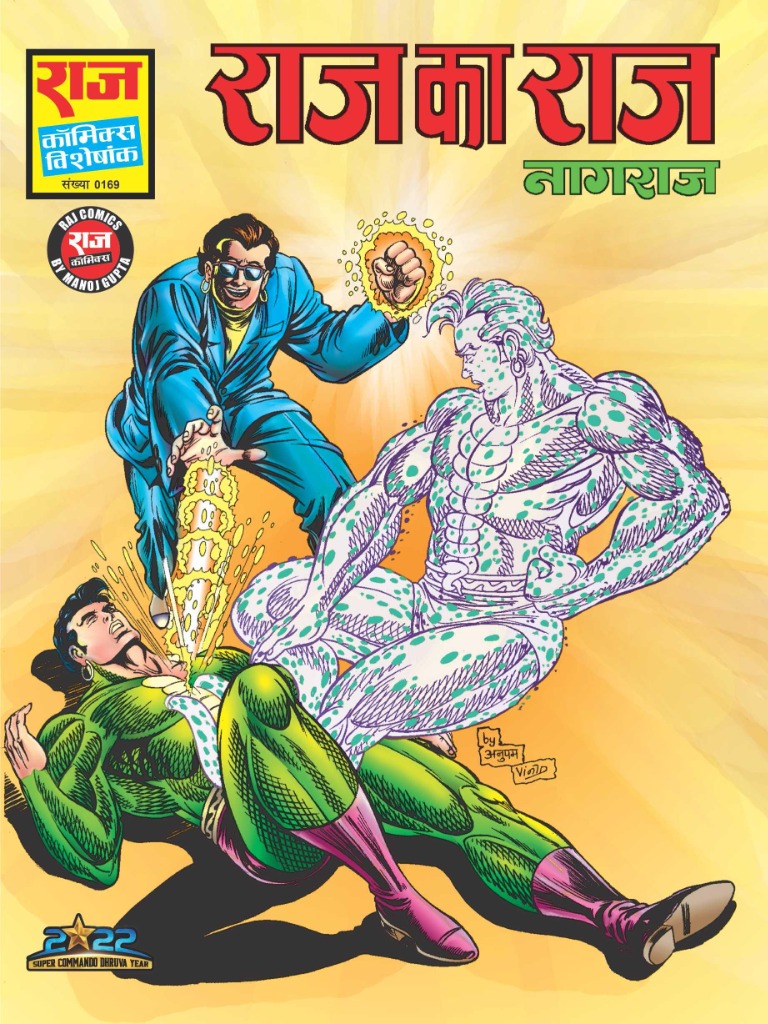
For a while, it felt like Indian comics had quietly disappeared.
Not completely, of course. Nagraj was still around. Chacha Chaudhary never really went anywhere. Tinkle continued publishing, Amar Chitra Katha kept bringing out new books, and there were always creators somewhere drawing, writing and self-publishing their own stories. But if you grew up in the 1990s or early 2000s, there was a noticeable difference. Indian comics were once something you could simply stumble across. They were sitting at railway stalls, neighbourhood bookshops and magazine stands. You didn't have to search for Nagraj or Dhruva. They were just there.
Then manga arrived in a much bigger way. Anime exploded. Marvel became a global phenomenon. Webtoons, digital comics and social media changed how people discovered artists. Suddenly a teenager in India could follow One Piece, Jujutsu Kaisen or Solo Leveling almost immediately, while finding a new Indian comic could require considerably more effort.
That may finally be changing.
There isn't one giant event that proves Indian comics have suddenly become mainstream again, but there are enough small signs to suggest that something is happening. New Indian comics continue to appear, old characters are being brought back, publishers are experimenting with digital platforms, Comic Con events are giving independent creators a place to meet readers, and a new generation of artists is making comics without necessarily waiting for a traditional publisher to give them permission.
That is perhaps the most interesting part of the current Indian comics scene.
It isn't really a revival of the old industry.
It is something different.
The old superheroes never really disappeared
If you grew up with Indian comics, names like Nagraj, Super Commando Dhruva and Doga probably need no introduction.
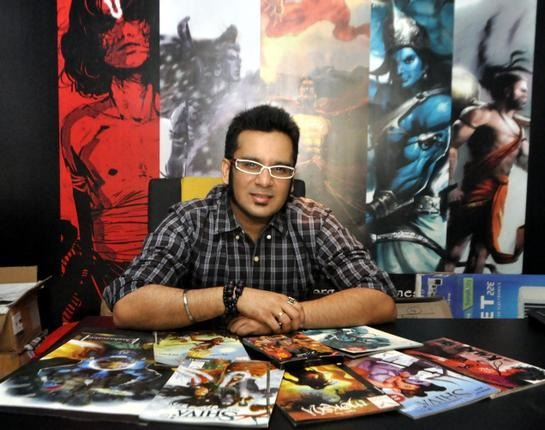
Raj Comics created an entire generation of Indian superheroes who had their own worlds, villains, rivalries and mythology. Nagraj seamlessly blended ancient Indian snake folklore and supernatural elements into a superhero mantle; Dhruva brought tactical intellect and stunt acrobatics closer to classic crime-fighting; while Doga presented a gritty, hyper-realistic, street-level vigilante battling Mumbai's underworld.
For many readers, these characters were India's answer to the superheroes they were seeing from America.
But the market around them changed.
Television became more accessible. Video games became mainstream. Then came smartphones and streaming. Manga and anime became dramatically easier to access. A child who once had to wait for the next comic at a local shop could now open a phone and read or watch something from Japan almost instantly.
The problem wasn't necessarily that Indian stories had become worse.
They became harder to find.
That distinction matters.
A 2023 India Today report looking at the decline of Indian comics made essentially the same observation: manga and superhero franchises had become much easier for young readers to access, while Indian superhero comics struggled with availability and distribution.
And that is precisely the problem the new generation of Indian comic creators is trying to solve.
Raj Comics is still betting on its superheroes
One of the clearest signs that the old Indian superhero universe isn't finished is Raj Comics itself.
The publisher continues to sell and release material featuring its established characters. Its current store lists newer books including Doga: Raat Ka Rakshak, Nagraj: The Origin Saga and Mahanagayan: Bali Parv, alongside other titles.
That may not sound revolutionary, but there is something important about it.
These characters are still being treated as living properties rather than simply pieces of Indian pop-culture nostalgia.
The question now is whether they can attract people who didn't grow up reading them.
That's a much harder challenge.
Someone who discovered Nagraj in 1998 already has an emotional connection to the character. Someone discovering him for the first time in 2026 is comparing him with Luffy, Batman, Naruto, Spider-Man and dozens of other characters that are available everywhere.
Indian superheroes therefore have to compete not only on nostalgia, but on storytelling, presentation and accessibility.
And that is where things get interesting.
The digital generation doesn't have the same reading habits
The comic book market isn't what it was when a physical comic was the easiest form of entertainment a child could carry around.
Today, a reader is much more likely to discover a character through Instagram, YouTube, Reddit, a webcomic platform or a short video before deciding whether they want to read a full story.
Indian publishers are adapting to that reality in different ways.
Amar Chitra Katha, for example, now offers digital subscriptions for both ACK and Tinkle, alongside its physical books. Its current catalogue includes new releases such as Mahadeva, Divine Rivers, Tribal Folklore of India and a biography of Vikram Sarabhai.
That is significant because ACK is one of the oldest names in Indian comics. The company isn't simply trying to preserve the format that worked decades ago; it is continuing to publish new material while putting its catalogue into digital formats.
Tinkle is doing something similar.
And the characters themselves still have remarkable staying power. Illustrator Savio Mascarenhas, who has been drawing Shikari Shambu since 1997, spoke earlier this year about readers bringing old Tinkle books to Comic Con for signatures — sometimes even asking him to sign books for their future children.
That kind of reaction tells you something that sales charts can't.
There is still an emotional connection.
The challenge is turning that nostalgia into a new readership.
But the most exciting part may be happening outside the big publishers
This is where the Indian comics conversation becomes much more interesting.
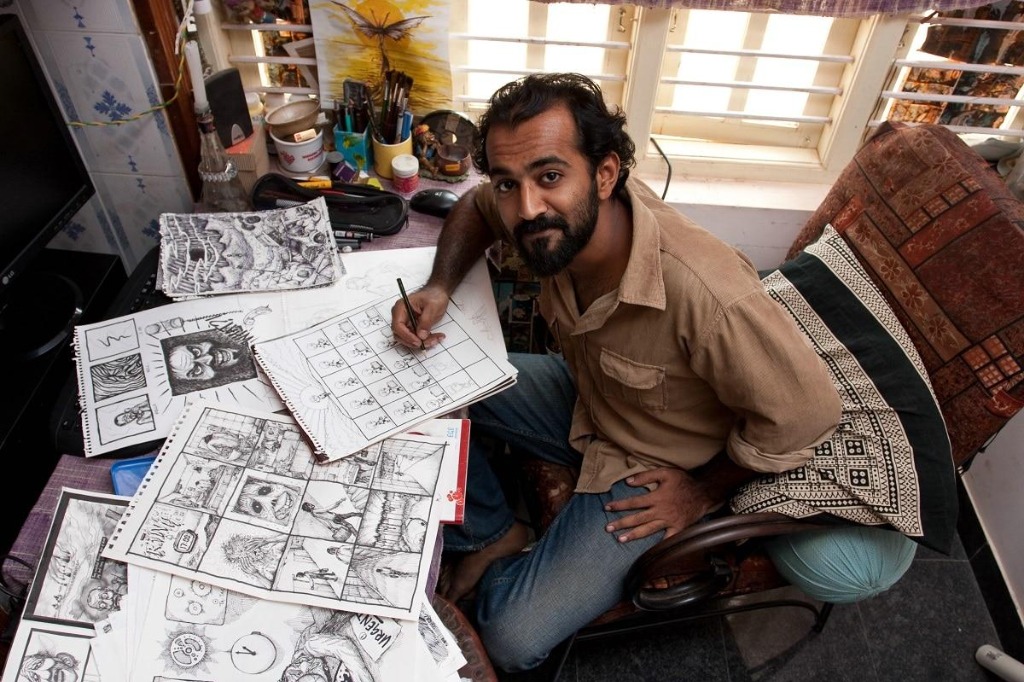
The future of Indian comics may not be built entirely by Raj Comics, Amar Chitra Katha or other established publishers.
There is a growing group of independent creators producing comics on their own terms. Some are influenced by manga. Others draw from Indian mythology, folklore, history or contemporary life. Some are creating superhero stories. Others are making horror, fantasy, science fiction or slice-of-life comics.
And unlike previous generations, these creators don't necessarily need a nationwide distribution network to find their first hundred readers.
They can put a comic online.
They can post artwork on social media.
They can build a community.
They can crowdfund a physical edition.
They can sell directly to readers.
That doesn't mean the business has suddenly become easy. It hasn't.
In fact, one of the biggest problems with Indian comics remains discoverability.
There may be hundreds of talented creators, but readers can't support something they never encounter.
That is why platforms, conventions and communities that bring creators and readers together can become surprisingly important.
Comic Con is becoming more than a place to buy merchandise
Comic conventions in India have increasingly become meeting points for this ecosystem.
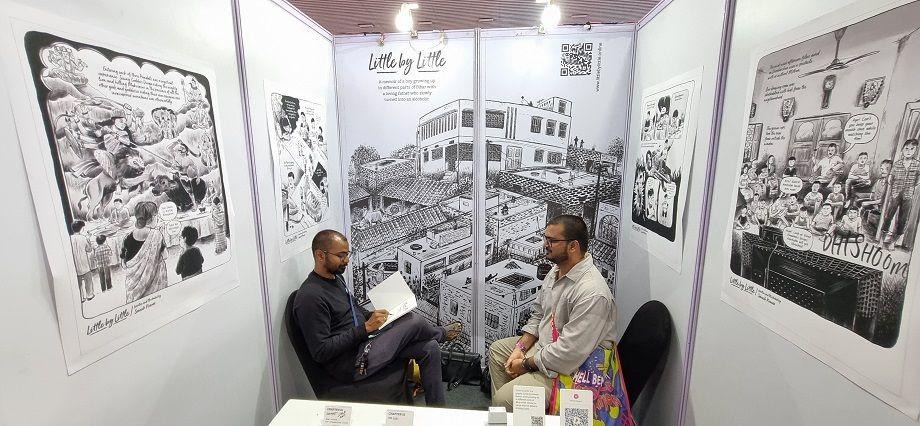
A recent Business Standard report on Indian comics described the scene at Comic Con as a place where self-published creators, legacy characters and independent books appear alongside one another — while also pointing out that outside these events, Indian comics still have limited visibility in mainstream bookshops and everyday reading.
That contradiction probably explains the Indian comics industry better than anything else.
There are creators. There are readers. There is enthusiasm. But the connection between them is still weak.
A creator might spend months making a comic and still struggle to get it in front of people.
A reader might genuinely want to discover Indian comics and have no idea where to look.
That gap is an opportunity.
Indian comics don't need to become manga
There is another trap the industry should probably avoid.
Because manga and anime are so successful in India right now, it is tempting to think that Indian comics need to copy them.
They don't.
What made One Piece successful wasn't simply its drawing style. It was the world, the characters, the humour, the emotional payoffs and the enormous sense of adventure.
Indian creators have their own material to work with.
We have thousands of years of mythology and folklore. We have regional legends that rarely appear in mainstream entertainment. We have contemporary Indian cities, languages, cultures and social experiences that can provide settings for stories that simply couldn't have been made anywhere else.
And there is already evidence that modern Indian creators are moving beyond the old idea that comics are primarily children's entertainment. Recent coverage of the Indian comics scene by India Narrative has highlighted creators using mythology, social commentary and contemporary themes while trying to reach older and international readers as well.
That's probably the direction worth watching.
Not "Indian manga."
Indian comics.
So, is Indian comics actually making a comeback?
I'd say yes — but it's too early to call it a full revival.
The industry still has serious problems.
Distribution remains difficult. Physical comics are competing with essentially unlimited digital entertainment. Many creators don't have sustainable income. Discoverability is poor. And the average Indian reader can find thousands of internationally popular manga and comics more easily than a good Indian indie title.
Those problems haven't magically disappeared.
But something has changed.
There is a new generation of readers who grew up consuming manga, anime, Marvel, DC and webcomics and who are now old enough to start creating stories themselves.
There are established Indian publishers trying to modernise their catalogues.
Raj Comics is still keeping Nagraj, Dhruva and Doga alive.
ACK and Tinkle are still publishing and expanding their digital presence.
Comic conventions are giving independent creators somewhere to meet readers.
And perhaps most importantly, there are creators who don't seem particularly interested in waiting for someone else to rebuild the industry.
They're simply making comics.
That's where the next Indian comics boom could come from.
Not from one giant superhero movie.
Not from copying Marvel.
Not from trying to make the next One Piece overnight.
It could come from hundreds of small creators finding their first thousand readers.
Then those thousand readers finding another creator.
Then another.
And eventually, someone makes a character that people who have never heard of Raj Comics will grow up talking about.
That would be a genuine revival.
And perhaps the most exciting thing about Indian comics in 2026 is that we may already be watching the beginning of it — we just don't know which creators are going to become the important ones yet.
Featured Original Indian Indie Comics on ZealPlane
Explore original indie comics available free to read online:
Trending Indie Webcomics & Manga
- Read Chullu aur Lootera Bhoot online free
- Read My most favorite gags of Guddu online free
- Read Chullu aur Khadoos uncle online free
- Read Animocity Review online free
- Read When horror meets humour online free
- Read THE GIRL INSIDE THE CUPBOARD online free
- Read वज्रयोद्धा By Magha Studio online free
- Read Read 'GHOST IN THE CROWD' by Prince Ayush online free
Latest Pop Culture & Comic News
- One Piece Chapter 1195 Spoilers: Release Date, Global Schedule, and Early Elbaph Hints
- Are Demon Slayer's Breathing Techniques Actually Real — Or Just Visual Flair?
- Spider-Man Is Doing Luffy's Gear 2 Pose, and Fans Are Rightfully Losing It
- Spider-Man Is Doing Luffy's Gear 2 Pose, and Fans Are Rightfully Losing It
- The Ultimate Webtoon Canvas Size & Slicing Guide (2026): How to Format, Slice, and Publish Without Quality Loss
- Beyond Squid Game and Alice in Borderland: 5 Death Game Stories That Actually Get Under Your Skin