Liar Game vs. Tomodachi Game: Who Truly Played the Deadlier Psychological Battle?
By ZealPlane Editorial | Senior Pop Culture & Manga Analyst | ZealPlane Chronicles

One uses pure mathematics to dismantle human greed. The other uses friendship itself as the weapon. Twenty years apart, these two manga redefined what a psychological game thriller could do — and now, with Liar Game finally getting its anime in 2026, the question is worth settling properly.
They share the same shelf space. Fans of one almost always end up reading the other. Both involve debt, deception, and characters who are considerably smarter than they first appear.
But Liar Game and Tomodachi Game are not the same story wearing different clothes. They operate on fundamentally different psychological principles, target different human weaknesses, and arrive at completely different conclusions about what people actually are when the pressure becomes unbearable.
This is not a ranking. This is a dissection.
The Setup: What Kind of Game Are We Actually Talking About?
Before comparing them, be precise about what each series is doing — because the surface similarity hides a genuine philosophical divide.
Liar Game (Shinobu Kaitani, 2005–2015) drops its players into a series of mathematically elegant games — Minority Rule, Contraband, musical chairs variants — where the correct answer is almost always counterintuitive. The games are designed to exploit specifically human cognitive biases: loss aversion, short-term thinking, the instinct to defect when cooperation is actually optimal. They are, in essence, applied behavioral economics dressed as entertainment. The Liar Game Organization doesn't care if you lie. It's designed so that rational self-interest, pursued independently by everyone, produces the worst possible collective outcome.
Tomodachi Game (Mikoto Yamaguchi, Yuuki Satou, 2013–2024) operates on different machinery entirely. Its games are not mathematically elegant — they're socially engineered. The point is not to exploit how people make decisions under uncertainty. The point is to exploit what people already know about each other. Secrets, resentments, old debts, buried loyalties — the games are specifically designed to surface them. Where Liar Game pits strangers against each other in abstract decision scenarios, Tomodachi Game puts friends in a room and slowly dissolves the thing that held them together.
Same genre label. Completely different weapons.
The Protagonist Problem: Honest vs. Ruthless
This is where the two series make their most revealing design choice.
Nao Kanzaki — Liar Game's moral anchor — is almost aggressively, unreasonably honest. She is the kind of person who returns found wallets with the cash intact and apologizes for things that aren't her fault. Placed in a game explicitly designed to exploit trust and cooperation, conventional logic brands her the worst possible player, while Shinichi Akiyama recognizes her as the most dangerous player in the room.
Kanzaki's honesty is not mere naivety — it's a deliberate structural mechanism. Kaitani argues something specific: that in a system optimized for betrayal, someone who genuinely refuses to defect becomes an unmodelable variable that pure game-theory strategists cannot compute. Akiyama provides the intellectual engine, but Kanzaki is the variable that opponents never correctly model.

Yuuichi Katagiri — Tomodachi Game's lead — appears initially to be the exact opposite: warm, selfless, fiercely loyal to his friends. Then the game starts. And over approximately 130 chapters, the reader discovers that Katagiri's apparent warmth conceals a strategic intellect so cold and patient that it makes Akiyama look measured by comparison.
The reveal is Tomodachi Game's defining stroke: the person who seemed to need protecting was, all along, orchestrating the catastrophe. Katagiri doesn't merely solve the game. He psychologically dismantles his opponents from the inside out. And the question the series relentlessly probes — does he do it to save his friends, or because he is fundamentally incapable of genuine connection — never fully resolves, which is precisely why it lingers.
Verdict on protagonists: Liar Game's Nao and Akiyama pairing is more emotionally satisfying and structured. Tomodachi Game's Katagiri is genuinely unsettling — an anti-hero whose true interiority remains ambiguous to the final chapter.
The Game Design: Mathematics vs. Sociology
Liar Game's games are its greatest triumph and the purest expression of Kaitani's fascination with applied logic. Each game is a variation on a classic decision theory problem — Prisoner's Dilemma, Minority Rule, coordination failures — adapted for maximum human tension. Crucially, they are internally consistent. If you understand the mathematics and the payoff matrix, you can solve them. Akiyama always can.
The dramatic conflict is never whether a mathematical solution exists, but whether Akiyama can communicate the winning strategy to flawed human beings and convince them to trust it when fear and personal greed scream otherwise. This gives Liar Game an intellectual cleanliness rare in manga: the games are fair, they have objectively correct answers, and the tragedy stems entirely from human failure to execute optimal collective rationality.
Tomodachi Game's games don't have "correct answers" in that mathematical sense. They have exploitable vulnerabilities — pathways to victory that require you to weaponize intimate truths about your companions. A game that appears to test physical reflexes is actually testing who you are willing to sacrifice. A game framed around memory is secretly testing which unforgivable secrets you've kept hidden. The games are fair only in the sense that they are equally horrifying for everyone involved.
You cannot "Akiyama" your way through Tomodachi Game with clean probability equations. To survive, you must know your friends' deepest psychological scars and be prepared to twist the knife.
Verdict on game design: Liar Game for intellectual elegance and satisfying game theory. Tomodachi Game for emotional devastation and the sickening spectacle of watching human intimacy weaponized as leverage.
The Central Question: What Do People Actually Do?
Every psychological thriller is implicitly arguing something about human nature. What do people do when the incentives are designed to break them?
Liar Game's answer: People are short-sighted and greedy by default, but they can be organized into cooperation by someone who understands the system well enough to restructure the incentives. Underneath the debt mechanics, the series is fundamentally optimistic. Akiyama's project is not to win for himself — it is to demonstrate that collective rationality is achievable if someone is willing to do the organizational heavy lifting. The final obstacle of Liar Game isn't Norihiko Yokoya. It's the assumption that betrayal is inevitable.
Tomodachi Game's answer: Friendship is real, but it is also a structure — and structures can be stress-tested until they fracture. The series does not conclude that people are fundamentally untrustworthy. It concludes something more uncomfortable: that trust, without genuine knowledge of who you're trusting, is a vulnerability as much as a virtue. Katagiri loves his friends. He also uses them. Tomodachi Game doesn't resolve that contradiction because it doesn't believe the contradiction is resolvable.
Verdict on thematic depth: Liar Game is more coherent and teachable — its argument is clear and its conclusion earned. Tomodachi Game is more unsettling and honest about the ambiguity at the center of human relationships. Neither is wrong. They are asking fundamentally different questions.
The Villain Question: Who Built the Deadlier Trap?
Yokoya is Liar Game's clearest antagonist — a brilliant, power-obsessed manipulator who mistakes domination for intelligence. He is an excellent foil because he represents the obvious path: use superior reasoning to extract maximum value for yourself and let everyone else suffer. Akiyama is compelling precisely because he is smarter than Yokoya yet pursues completely opposite goals.
The Liar Game Organization itself is the larger antagonist — a system that harvests human greed so efficiently that it has become self-sustaining. The games do not need a mastermind to be cruel. The cruelty is built into the architecture.
Tomodachi Game's antagonist structure is considerably messier, which is either its greatest asset or its greatest flaw depending on what you seek in a narrative. The antagonist shifts. Motivations are revised retroactively. What appears to be a clear villain becomes a tragic figure; what seemed like a hero reveals a manipulative core. By the climax, the very concept of "villain" has been interrogated so thoroughly that it barely holds together.
Verdict on villains: Liar Game for clarity and satisfying antagonist design. Tomodachi Game for ambition and moral grey areas, even if it occasionally overcomplicates its own web.
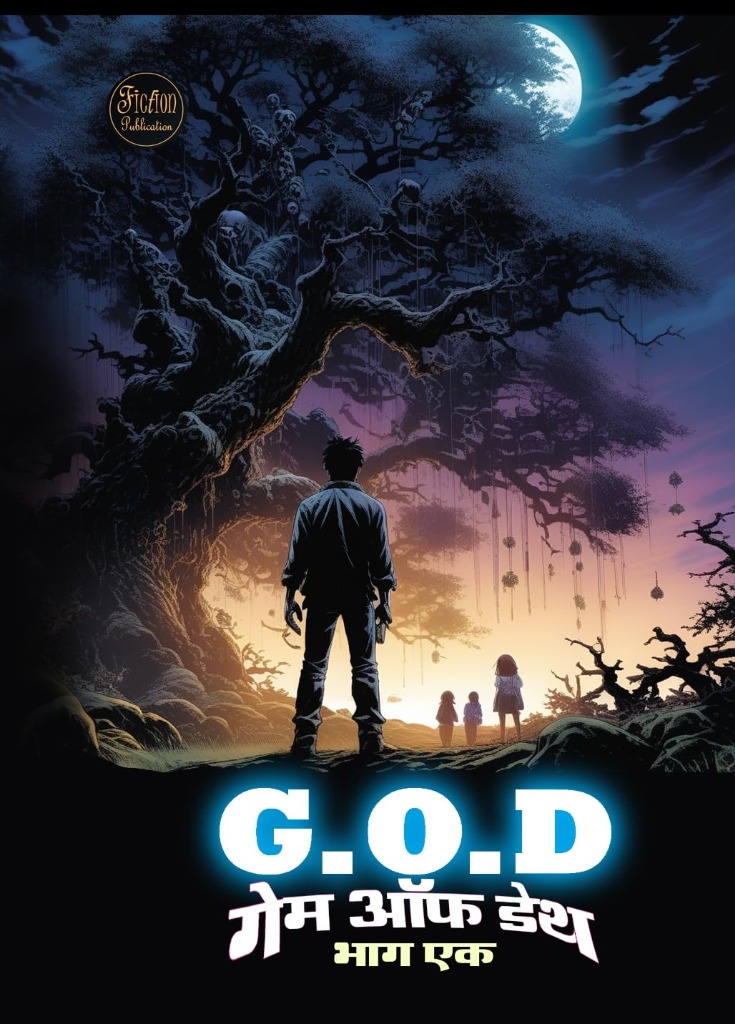
Craving a Deadlier Survival Game? Read G.O.D (Game of Death)
Written by ZealPlane creator Krishna Kumar, G.O.D (Game of Death) plunges participants into an unforgiving psychological trial where human morality is stripped away round by round. Available now on Amazon Kindle and free with Kindle Unlimited.
The 2026 Angle: Why This Comparison Matters Right Now
Liar Game's anime — produced by Madhouse and streaming on Prime Video in 2026 — brings a fresh wave of audiences to a series that completed its manga serialization in 2015. For anyone discovering it through the adaptation, Tomodachi Game is the natural next read. It is the series that most directly continues the dialogue Kaitani began.
Yet "natural next read" is not "identical story." The 2026 adaptation provides an opportunity to evaluate these two works as companion pieces — to understand not merely where they resemble one another, but precisely where they diverge and what that divergence illuminates about the different shades of psychological darkness each creator sought to explore.
Tomodachi Game ran from 2013 to 2024, giving it the advantage of observing what Liar Game established and deliberately complicating it. The friendship mechanic, the protagonist-as-hidden-threat dynamic, and trials that weaponize intimate history rather than abstract probability matrices all function as a conscious response to Kaitani's foundation. Not a critique, but an escalation.
Which psychological thriller was truly deadlier?
Akiyama's pure game theory vs. Katagiri's emotional slaughter. Cast your verdict.
The Verdict: Deadlier Is the Wrong Word
The premise this piece opened with — who played the deadlier psychological game — is ultimately the wrong framework.
Liar Game is more intellectually rigorous. Its games are more elegant. Its argument is more coherent. If you wish to understand how the Prisoner's Dilemma functions in practice and why people consistently fail to overcome it, Liar Game explains it better than most academic textbooks, while delivering relentless narrative tension.
Tomodachi Game is more emotionally corrosive. It leaves a different kind of scar — not because the games are inherently more lethal, but because the wounds are personal. Watching strangers betray each other is disquieting. Watching friends do it, with surgical knowledge of where it hurts most, is agonizing.
The deadlier series depends on what you dread most.
If your dread is being trapped in a system engineered to make you selfish against your own conscience — Liar Game is your story.
If your dread is uncovering that the people closest to you have always known precisely how to dismantle you — Tomodachi Game is your story.
Most readers, when honest with themselves, are terrified of both.
Where to Start — And What to Read Next
- Liar Game manga: Complete in 19 volumes, published by Shueisha / VIZ Media. The 2026 anime adaptation by Madhouse covers the initial arcs and serves as a superb gateway.
- Tomodachi Game manga: Complete in 26 volumes across 130 chapters (MAL 8.35). The 2022 television anime covers only the opening trials; the manga descends into significantly darker and more complex psychological territory.
- Suggested reading order: Liar Game first, followed by Tomodachi Game. The second hits considerably harder once you understand the genre conventions established by the first.
Featured Original Indian Indie Comics on ZealPlane
Explore original indie comics available free to read online:
Trending Indie Webcomics & Manga
- Read Chullu aur Lootera Bhoot online free
- Read My most favorite gags of Guddu online free
- Read Chullu aur Khadoos uncle online free
- Read Animocity Review online free
- Read When horror meets humour online free
- Read THE GIRL INSIDE THE CUPBOARD online free
- Read वज्रयोद्धा By Magha Studio online free
- Read Read 'GHOST IN THE CROWD' by Prince Ayush online free
Latest Pop Culture & Comic News
- One Piece Chapter 1195 Spoilers: Release Date, Global Schedule, and Early Elbaph Hints
- Are Demon Slayer's Breathing Techniques Actually Real — Or Just Visual Flair?
- Spider-Man Is Doing Luffy's Gear 2 Pose, and Fans Are Rightfully Losing It
- Spider-Man Is Doing Luffy's Gear 2 Pose, and Fans Are Rightfully Losing It
- The Ultimate Webtoon Canvas Size & Slicing Guide (2026): How to Format, Slice, and Publish Without Quality Loss
- Beyond Squid Game and Alice in Borderland: 5 Death Game Stories That Actually Get Under Your Skin