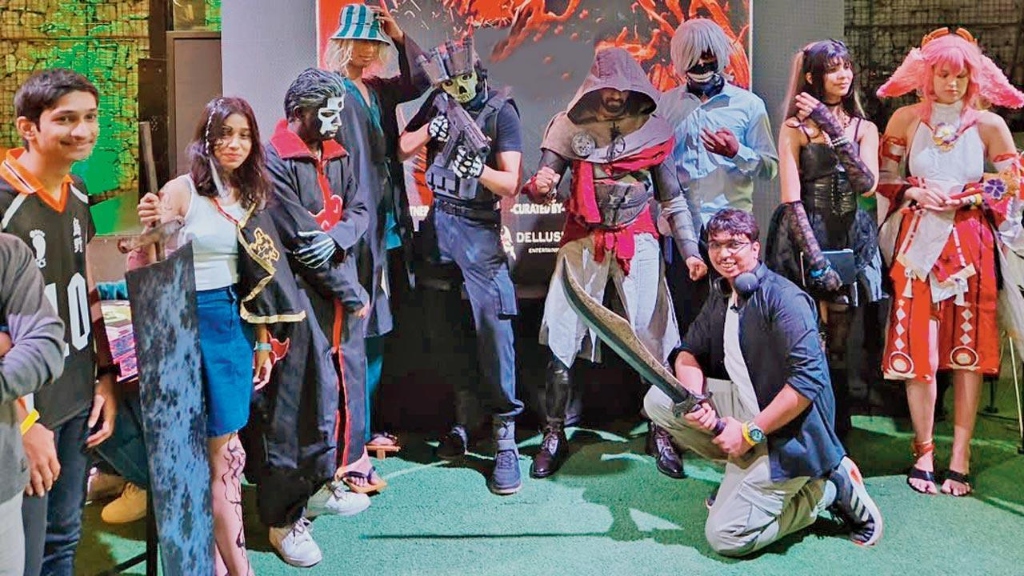
If you walked past the NESCO Exhibition Centre in Goregaon during the last weekend of August, the scene looked almost unreal. Despite the Mumbai monsoon, thousands of young fans were lined up in elaborate cosplay — Akatsuki cloaks brushing against Bleach captains, wooden buster swords wrapped in tape, and makeshift devil horns pinned onto wigs. Inside the halls, over 45,000 people showed up across three days for Anime India Mumbai 2026, creating one of the loudest gatherings the domestic pop culture scene has ever witnessed.
For nearly a decade, the conversation around Indian anime fandom has been stuck on a single repetitive question: is this a genuine cultural shift, or just a loud online bubble? Mumbai may have finally put that debate to rest.
When Japanese Studios Start Paying Attention
Convention culture is fundamentally different from passive streaming. Watching an episode of Demon Slayer or Jujutsu Kaisen on your phone during a local train commute requires very little commitment. Buying a weekend pass, traveling across cities, booking hotel rooms, and spending hours crafting a handmade costume demands real emotional and financial investment.
That investment has clearly caught the attention of the industry in Tokyo. Among the headline guests in Mumbai was Hayato Date, the veteran director responsible for steering Naruto and Naruto Shippuden through hundreds of its most iconic episodes. Seeing him take the stage in Mumbai — marking his first official visit to India — felt like a symbolic turning point. He was joined by Sakamoto Days producer Ryota Hasegawa and singer-voice actress Yura Akari.
Japanese production committees and licensors are notoriously cautious about international market expansion. They do not send senior directors and franchise producers to territories out of goodwill. They do it because their dashboards are showing spikes in viewership, search volume, and ticket sales. For years, India was treated as a low-margin territory where piracy was the default and formal monetization seemed impossible. The footfall at NESCO suggests those assumptions are quickly becoming obsolete.
🔗 Speaking of high-octane martial arts action and supernatural battles — dive into Prana (English Chapter 1) on ZealPlane, blending ancient Indian lore with raw manga-style combat.
The Numbers Tell a Broader Story
What makes the Mumbai turnout noteworthy is that it isn't an isolated anomaly. The organizers behind Anime India reported more than 33,000 attendees at their Kolkata edition earlier this year, pushing cumulative attendance across recent events past the 100,000 mark. The vast majority of this audience belongs to Gen Z and young millennials.
More importantly, this generation is redefining what fandom looks like in India. They aren't merely downloading episodes; they are spending disposable income on physical manga volumes, attending artist alleys to buy fan-made prints, commissioning custom props, and paying premium rates for imported figures. An entire commercial ecosystem is quietly assembling itself around the subculture.
Community Question: Is India Ready for Its Own Global Manga / Anime?
With 45,000+ fans packing NESCO Mumbai, where do you see the Indian anime & comic scene heading?
📊 THE ANIME INDIA CHECKPOINT
- 45,000+ attendees recorded at Anime India Mumbai 2026
- Three-day run from August 28–30, 2026 at NESCO Exhibition Centre in Goregaon
- 33,000+ reported attendance at the earlier Kolkata 2026 edition
- 100,000+ cumulative attendees across recent editions, driven primarily by Gen Z audiences
- Key Japanese guests: Hayato Date (Director, Naruto / Naruto Shippuden), Ryota Hasegawa (Producer, Sakamoto Days), and Yura Akari (Singer & Voice Actress)
The Transition From Consumers to Creators
The deeper, more consequential shift is what happens next. A generation that grew up on Dragon Ball on Cartoon Network and Naruto on afternoon television has come of age. Many of them are working professionals now, and an increasing number are picking up digital styluses, writing scripts, and studying panel composition.
India has a rich history of graphic storytelling — from vintage newsstand digests to mythological epics — but for nearly two decades, there was a generational void. Modern youth culture found its visual literacy in manga and manhwa rather than local periodicals. They learned pacing from Eiichiro Oda, dynamic choreography from Gege Akutami, and dramatic suspense from Kentaro Miura.
Now, the visual language of manga has become second nature to millions of young Indian readers. That creates a rare opening for homegrown creators: the chance to tell original Indian stories — rooted in local myths, modern urban realities, folklore, and fantasy — using the exact narrative medium this audience already loves.
🔥 Curious about original Indian comic storytelling? Read Karma on ZealPlane — our #1 most-read indie comic (3,450+ views) exploring fate, ancient curses, and mythic warriors.
The crowd in Mumbai showed that the community has the numbers, the energy, and the passion to fill stadiums. The challenge for the next decade will be giving them homegrown worlds and characters that feel just as compelling to rally behind.
That is what makes this moment so promising. The anime boom is not just building a massive consumer market for imported shows. It is laying the groundwork for India's next generation of graphic novelists, manga artists, and visual storytellers.
— ZealPlane Editorial · Published September 2026