Chainsmoker Cat Is Being Pulled From Streaming — And the Real Reason Is Weirder Than You Think
By ZealPlane Editorial | Senior Pop Culture & Manga Analyst | ZealPlane Chronicles
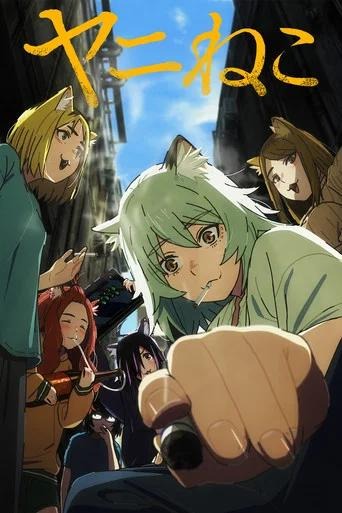
Here's the thing nobody is saying out loud:
This anime isn't being pulled because it's offensive. It isn't being pulled because regulators think it's dangerous, or disturbing, or morally corrupt.
It's being pulled because someone decided it looked like an advertisement.
For a show whose entire premise is making smoking look as miserable and pathetic as humanly possible, that is one of the more surreal outcomes I've seen in 2026.
And once you understand why that happened, the conversation gets a lot more interesting than "anime banned for cigarettes."
So — what even is Chainsmoker Cat?
Let me set the scene properly, because the title alone will make you assume things that aren't entirely accurate.
Was pulling Chainsmoker Cat from streaming platforms justified?
The series portrays addiction as grim and destructive, but displays real cigarette branding.
Chainsmoker Cat — also known as Yani Neko — is a 2026 anime adaptation of NyanNyanFactory's manga from Kodansha's Weekly Young Magazine. It follows Yaniko Sato, a catgirl who is, without sugarcoating it, completely destroyed by her smoking addiction.
Not in a cool, brooding way. In a she-is-spending-money-she-doesn't-have-and-ruining-her-life way.
The show is dark comedy. The joke isn't that smoking is glamorous. The joke is that Yaniko genuinely cannot stop, and watching her try to navigate normal life while being completely enslaved to cigarettes is the absurdist fuel for every episode.
Bibury Animation Studios produced it. Taku Kimura directed it. It premiered in July 2026 and almost immediately started attracting attention — which, given its premise, was probably unavoidable.
But here's the part nobody expected.
The part where Hong Kong's Department of Health got involved
On August 17, a Taiwan-based streaming platform called Animation Crazy sent out a notice.
Chainsmoker Cat would be suspended for Hong Kong viewers. Not because of the show's content being objectionable. But because the platform had received a formal letter from Hong Kong's Department of Health, citing violations of the city's rules on online advertising of smoking products.
Ani-One Asia followed. They removed the anime from their YouTube platform across affected markets, citing local government regulations.
This is where I want you to slow down with me for a second.
Because the law being invoked here — Hong Kong's Smoking (Public Health) Ordinance — restricts advertising of tobacco products online. Maximum fine: HK$50,000, with additional penalties for continuing offences.
The question regulators are asking isn't: is this anime a good moral influence?
The question is: does this content legally function as an advertisement?
And that is a completely different conversation.
🔗 Speaking of characters who can't escape their own nature — if you haven't read Karma yet, Yaniko's situation is going to feel uncomfortably familiar. The single-shot masterpiece delves deep into the inescapable traps of destiny.
Here's the uncomfortable part
Watch five minutes of Chainsmoker Cat and the absurdity hits immediately.
Yaniko isn't aspirational. She's a mess. Her addiction is framed as a source of suffering, embarrassment and constant self-sabotage. Anime Corner's coverage of the show specifically described its depictions of smoking as intentionally unglamorous — dark comedy that uses the addiction as the punchline, not the lifestyle.
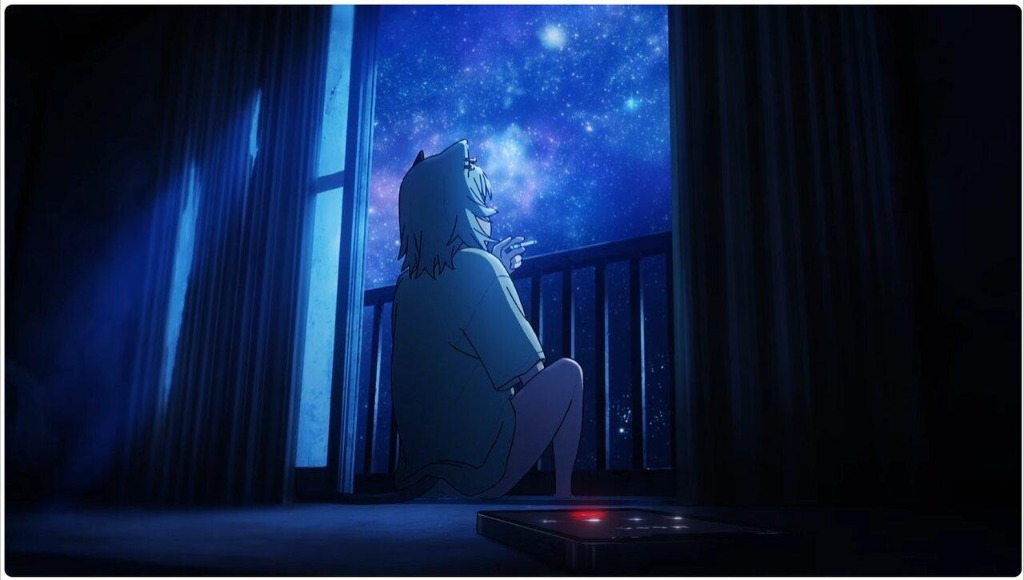
Yaniko on the balcony — the show portrays smoking as an isolating, destructive habit rather than a glamorous lifestyle.
So how does an anime that is actively making smoking look terrible end up caught in tobacco advertising regulations?
The answer, as best as anyone can figure out, comes down to real-world branding.
Fans watching the series noticed that the cigarettes depicted in Chainsmoker Cat are identifiable with real brands. Not fictional product names. Actual recognizable tobacco branding.
And that changes the legal calculation entirely.
Because a story can be critical of something — genuinely, earnestly, viciously critical — while still displaying that product repeatedly enough to constitute promotion in the eyes of the law.
Intent doesn't always override visibility.
Meanwhile, Japan was having a completely different conversation
This is the part that makes the whole story genuinely fascinating to me.
While Hong Kong regulators were treating Chainsmoker Cat as a potential advertising violation, Japan's Broadcasting Ethics & Program Improvement Organization was having its own discussion about the series.
The anime wasn't named directly. But viewers complained about depictions of smoking and illegal drugs. A committee member reportedly reviewed the situation and concluded the content was within the bounds of permissible freedom of expression.
So the same anime is sitting in two entirely separate arguments, simultaneously.
In one: “Should a TV anime be allowed to show this?”
In the other: “Does showing this product violate advertising law?”
Those aren't the same question. They don't even live in the same legal framework. And the answers are apparently different depending on which side of the border you're on.
🔗 We covered how regulatory pressure quietly reshapes what creators can even show in our deep-dive on Prana — a series that had to walk its own tightrope. Worth a read before you finish this one.
The bigger question this is quietly raising
Here's what I keep coming back to.
Chainsmoker Cat isn't a cautionary tale about one anime that stumbled into a controversy.
It's a very early, very clean test case for something the anime industry is going to have to reckon with more directly.
Anime has always been full of real-world products. Smartphones, cars, restaurants, fashion brands, energy drinks — fictional worlds are built from the same visual vocabulary as the real one, and that's usually fine.
Tobacco is different.
Tobacco advertising has been legally restricted across most of the world for decades. The same logic that gets a cigarette commercial banned from TV doesn't automatically disappear just because the cigarette is being held by a fictional catgirl.
And Chainsmoker Cat doesn't have a character who casually lights up in one dramatic scene.
The entire show is about cigarettes.
That changes the calculus. And if regulators in other markets start applying similar frameworks, creators are going to have to make an uncomfortable choice: invent fictional cigarette brands, alter the packaging, or simply remove recognizable products from stories where they might carry legal baggage.
That would quietly change the visual language of anime in ways most viewers would never consciously notice — but would absolutely feel.
The final irony
I have to say this, because it's almost too perfect.
Chainsmoker Cat is a show about a character who cannot stop something even when she knows it's destroying her.
She keeps going back to the cigarette.
The show keeps coming back into conversation.
Every article covering the removal, every argument about whether it's satire or promotion, every viewer now searching for the anime specifically because they've heard it's been removed from some platforms — all of it is driving attention to a series that, six weeks ago, most people outside Japan and the manga reader community had never heard of.
The attempt to make it less visible has, predictably, made it more visible.
That's not a defense of the regulatory decision or an attack on it. It's just the internet doing what the internet does.
“You probably shouldn't watch this” has always been one of the fastest ways to make people curious about something.
Where things actually stand right now
Let me be very clear on what we actually know, because the discourse has a way of turning this into something larger than it is.
- What happened: Animation Crazy suspended Chainsmoker Cat for Hong Kong viewers after a Department of Health notice, and Ani-One Asia removed the anime from its YouTube platform in affected markets due to online tobacco advertising rules around identifiable cigarette branding.
- What did NOT happen: Chainsmoker Cat has not been globally banned. Netflix currently lists it as a 10-episode 2026 series available in unaffected regions. No one has established that the creators intended to advertise cigarettes, and no sweeping industry-wide ban is underway.
But the question it leaves behind is real
Fiction needs room to portray unhealthy behavior without automatically becoming an advertisement for it.
A character smoking ten cigarettes in a row isn't necessarily selling cigarettes. Sometimes the cigarette is the character's wound. Sometimes — as in Yani Neko — the cigarette is the problem that the whole story is built around.
The creators clearly knew that. The viewers seem to understand it. The law, in at least one market, wasn't sure.
And that gap — between what a story means and what a regulator sees — is exactly where Chainsmoker Cat found itself in August 2026.
The cat is fictional.
The cigarette isn't.
And that single distinction turned a dark comedy about addiction into something far more complicated than its ridiculous title ever promised.
📋 THE ZEALPLANE LORE FILE
- Manga: Yani Neko by NyanNyanFactory, serialized in Weekly Young Magazine (Kodansha) since 2023
- Anime Studio: Bibury Animation Studios / Director: Taku Kimura
- Premiere: July 2026 (10 episodes)
- Removal Notices: Animation Crazy (Hong Kong) + Ani-One Asia (YouTube, affected markets)
- Legal Basis: Hong Kong Smoking (Public Health) Ordinance — online tobacco advertising restrictions
- Penalty Scale: HK$50,000 maximum fine + continuing offence penalties
- Availability: Remains available on Netflix in unaffected international territories
— ZealPlane Editorial · Published September 2026
Featured Original Indian Indie Comics on ZealPlane
Explore original indie comics available free to read online:
Trending Indie Webcomics & Manga
- Read Chullu aur Lootera Bhoot online free
- Read My most favorite gags of Guddu online free
- Read Chullu aur Khadoos uncle online free
- Read Animocity Review online free
- Read When horror meets humour online free
- Read THE GIRL INSIDE THE CUPBOARD online free
- Read वज्रयोद्धा By Magha Studio online free
- Read Read 'GHOST IN THE CROWD' by Prince Ayush online free
Latest Pop Culture & Comic News
- One Piece Chapter 1196 Spoilers: Sanji Awakens Conqueror’s Haki as Oda Finally Solves His Biggest Character Flaw
- Kagurabachi Anime Confirmed: World Tour Premiere, Release Schedule, and Where to Read the Manga
- Masashi Kishimoto Is Drawing Naruto Again. Here's Everything We Actually Know.
- सुपर कमांडो ध्रुव को हराना नामुमकिन क्यों है? (और यह आपके दिमाग के बारे में क्या सिखाता है)
- 2026 में भारतीय कॉमिक्स ऑनलाइन कहाँ और कैसे पढ़ें? (राज कॉमिक्स, Pratilipi, ToonSutra और नए विकल्प)
- One Piece Chapter 1195 Spoilers: Release Date, Global Schedule, and Early Elbaph Hints