The 4 Unforgivable Plot Holes Gege Akutami Left Unanswered in Jujutsu Kaisen's Finale
By ZealPlane Editorial | Senior Pop Culture & Manga Analyst | ZealPlane Chronicles
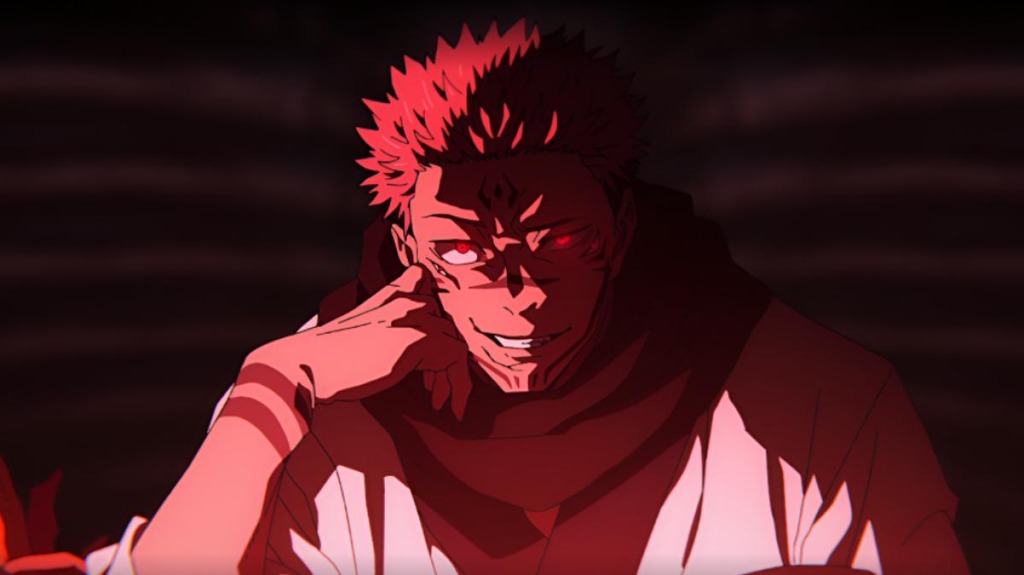
There's a strange feeling that comes with finishing Jujutsu Kaisen.
The final battle ends. Sukuna is gone. Yuji, Megumi and Nobara are standing together again. The story winds down with a quiet mission that deliberately echoes what everything looked like at the beginning — before the fingers, before the Culling Game, before all of it.
On paper, that works. Emotionally, it lands.
But here's the thing about JJK: it wasn't a story built on vibes. It was built on rules. Cursed techniques had mechanics. Domain Expansions had sure-hit effects. Binding Vows had costs. The whole series spent years establishing a world with internal logic, and then asked readers to trust that every introduced piece of information was going somewhere.
Some of it didn't arrive. And that's what we're going to talk about.
With Season 4 officially announced covering Culling Game Part 2, and promotional material putting Sukuna back at the center of things, the questions that survived the manga's ending are becoming relevant again. Before the anime reaches that final act, here are the four things Gege Akutami never quite finished answering.
1. What Actually Happened to the Great Merger?
This is the one that lingers longest.
For most of the Culling Game arc, everything Kenjaku does feeds into one goal: merging the Japanese population with Master Tengen. It sounds like the kind of threat that should eventually become the central catastrophe of the series. The barrier systems, the colonies, the accumulated cursed energy, the players, the points, the arcane rules — all of it reads like a machine being assembled.
And then Kenjaku dies. Sukuna takes over as the primary threat. The merger just... stops being relevant.
That's not automatically bad storytelling. The heroes prevented the plan from completing — that's how protagonists are supposed to work. But preventing a catastrophe and explaining what that catastrophe would have meant are two different things. We never really understand what the completed merger produces. We don't see the long-term consequences of the Culling Game on ordinary Japanese society. We don't get a satisfying look at what Tengen's transformation means for the jujutsu system going forward.
And the Tengen problem runs even deeper when you pull at it. Tengen is connected to the barriers protecting Japan, connected to Kenjaku, connected to the Star Plasma Vessel system, and eventually becomes the fulcrum of the entire merger plan. After the final conflict, the story barely returns to what any of that means for the future. One of the foundational systems of JJK just quietly exits stage left.
It's not a plot hole in the traditional sense — nothing contradicts anything else. It's something more frustrating: a gigantic setup that never received a proportionate conclusion.
⚔️ Also on ZealPlane
JJK Season 4 Culling Game Part 2 — Release Date, Trailer, Cast and Full Story Preview →2. Kenjaku's Thousand-Year Plan Ends Before We Understand Kenjaku
Kenjaku is one of the best villain concepts in modern shonen. A mind that has hopped between bodies for a thousand years, manipulating cursed techniques, sorcerers and historical events from the inside — that's genuinely unsettling in a way most antagonists never manage to be.
The problem is that his philosophy never gets a complete airing.
We know he wants to push humanity beyond its existing limits. We know he frames himself as someone driven by curiosity rather than conventional power or conquest. We know he's fascinated by evolution, by what happens when you remove the guardrails. That's a genuinely interesting worldview. It deserved one final, proper conversation — the kind where the curtain actually drops and you understand what was behind it.
Instead, Takaba's encounter becomes his final major storyline, and then he's removed from the board. The history of his previous bodies remains mostly reconstructed from fragments. His relationship with the figures he manipulated over centuries is never fully rendered. And most importantly, we never really discover whether he had a specific hypothesis about what the completed merger would produce — or whether the entire point was simply to observe something unpredictable.
A mysterious villain doesn't need every question answered. But if a story spends hundreds of chapters telling you that this villain has been running experiments on the jujutsu world for a millennium, the reader naturally expects the philosophy to receive some kind of final expression. Kenjaku never quite gets one.
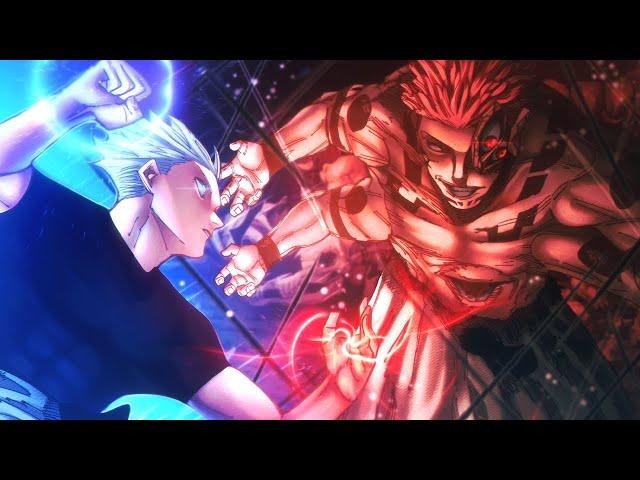
What was Kenjaku actually trying to achieve?
Pick your read on the greatest mastermind in JJK history:
3. Sukuna's Heian Past Was Finally Teased — Then the Story Walked Away
If Kenjaku was the mastermind mystery, Sukuna was the historical mystery. The King of Curses had existed for more than a thousand years. The Heian era was repeatedly described as the golden age of jujutsu. Sukuna was its ultimate monster. Everyone feared him. Everyone still talks about him in hushed tones a millennium later.
And yet, for most of the manga, we know surprisingly little about the man underneath the legend.
We get fragments. His relationship with Uraume. His ideology around strength and weakness. His unusual physical history. Hints about his twin. The way he views love as a liability. But there's no dedicated Heian-era arc. No extended account of how he became what he became. No complete explanation of the circumstances around his birth.
That's frustrating precisely because the story tells you, repeatedly, that Sukuna's origin matters. His connection to Yuji isn't just a vessel arrangement — there's a deeper biological and historical thread running between them. Kenjaku was involved in Yuji's birth. Sukuna had a twin. The intersection of those two histories feels like it was designed to become a major revelation.
After his defeat, Sukuna does receive something meaningful: a philosophical conclusion. He reflects on the path he chose and acknowledges that another path might have existed. That's actually a powerful note to end on for the character emotionally.
But it's not an origin story. And those are two completely different things.
Imagine 10 to 15 chapters in the Heian era. Sukuna before he became the legend. Uraume at his side from the beginning. The original jujutsu clans. The politics of ancient techniques. The people who actually tried to fight him before he became a cursed object. That material would have made his final battle feel twice as significant. Instead, we're still reconstructing who he was from pieces.
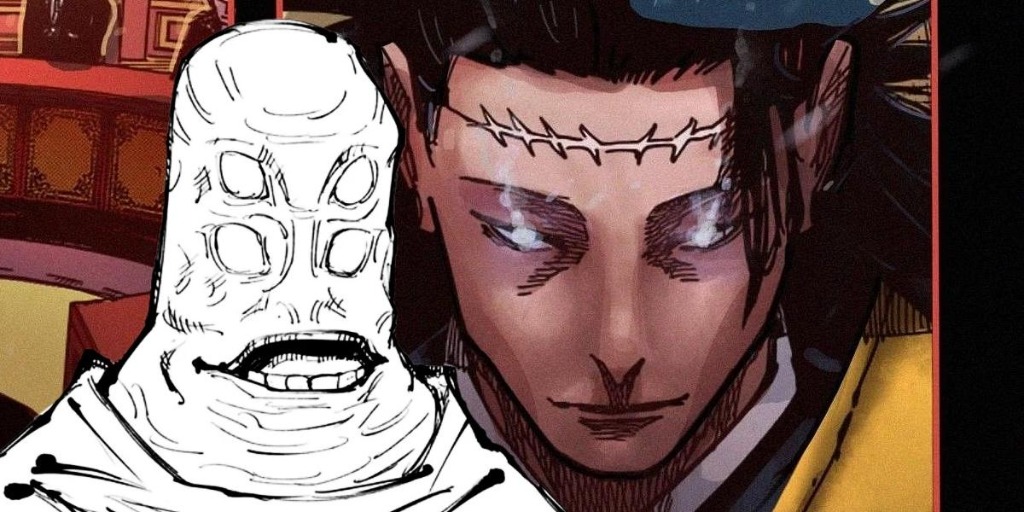
4. Yuji Gets a Domain Expansion — We're Still Not Sure What It Does
This one is smaller in scope than the first three. But it might be the most irritating from a pure mechanics perspective, because mechanics are exactly what JJK promised to be rigorous about.
The whole series trains you. Domain Expansions have sure-hit effects. They have names. They have internal logic. When Gojo activates Infinite Void, you understand what it does. When Sukuna uses Malevolent Shrine, you understand what it does. The series goes to great lengths to explain how these systems work, because that explanation is part of what makes the fights feel meaningful.
So when Yuji finally reveals his Domain Expansion during the climax, it's genuinely a huge moment.
And then you try to answer a basic question: What exactly does his Domain do?
Even after the manga ends, there's legitimate room for debate over the sure-hit effect and how its components relate to his soul-manipulation abilities. Contemporary post-finale discussions kept coming back to this as one of the major unanswered questions — not because the scene was badly drawn, but because the explanation that should accompany a major Domain never arrived.
Yuji's entire journey is about becoming a sorcerer from scratch. At the beginning he can barely sense cursed energy. By the end, he's fighting Sukuna inside a manifested domain using abilities he developed through everything he survived. His Domain should be the culmination of that growth — the moment where everything he learned crystallizes into a technique that only he could have.
Instead, it's something the reader has to infer. You can piece together what it might be doing. You can look at his Shrine technique and the soul-related powers and speculate. But the manga never sits down and says: this is what Yuji Itadori's Domain does, and this is why.
For a series that spent six years building its combat grammar, that's an unusually large omission right at the finish line.
⚔️ Related Coverage
JJK Chapter 271 Ending Explained — What Happened to Yuji, Megumi, Nobara and Gojo's Legacy →The One That Wasn't Actually a Plot Hole
Worth saying clearly, because it comes up constantly.
The mechanics of the World-Cutting Slash — Sukuna's technique that killed Gojo — were subsequently clarified. Chapter 255 explains the Binding Vow that made the attack possible in those specific circumstances, and later material added context about why Gojo was caught off guard.
Is the scene still debatable? Absolutely. Was the execution controversial? Of course. But calling the mechanics completely unexplained isn't accurate anymore. There's an important line between "I don't like how this was written" and "the manga never explained this." JJK has plenty of the second category without adding that one to the list.
The Bigger Problem Isn't Any Single Plot Hole
People often argue about whether the JJK ending was "bad." I don't think that's the most useful frame.
Parts of the ending work genuinely well. Yuji survives. Megumi gets another chance. Nobara comes home. Gojo stays dead — and that matters. The final mission deliberately mirrors the kind of ordinary work they would have been doing before any of this started. That's not accidental. The ending is trying to tell you that the world Gojo wanted to build is beginning. His students are building a future without depending on him. Chapter 271 shows that future taking its first steps.
What it doesn't completely close is the worldbuilding circle.
The Great Merger disappears. Kenjaku's philosophy never receives its final expression. Sukuna's Heian history remains mostly reconstructed from fragments. Yuji's Domain is left to inference. The jujutsu world's future — the institutions, the clans, the hierarchy — is largely left to implication.
Individually, each of these can be defended. Together, they create the feeling that the manga had more story inside it than the ending had room to contain.
And that might be the most accurate description of what actually happened here: not plot holes, exactly, but four places where JJK's ambition became larger than the amount of story Gege ultimately chose to tell.
The manga didn't run out of mysteries. It ran out of pages.
| Unresolved Storyline | Why It Matters | Answered? |
|---|---|---|
| The Great Merger | The central objective of Kenjaku's thousand-year plan | No complete aftermath |
| Kenjaku's true endgame | Defines the philosophy behind the main mastermind | Only partially |
| Sukuna's Heian history | Explains the origins of the series' ultimate villain | Fragments only |
| Yuji's Domain Expansion | The culmination of Yuji's entire sorcery journey | Mechanics unclear |
Could the Anime Fix Some of This?
Actually, yes — and this is where things get interesting.
The anime is now approaching material that leads directly into these controversial parts of the story. Season 4 covering Culling Game Part 2 brings together Hakari, Panda, Maki, Choso, Yuki, Tengen and Sukuna in a way that, in the manga, eventually led to the final act. The anime has something the manga no longer has: time.
Not necessarily enough to rewrite the story. But enough to clarify it. A longer conversation explaining Kenjaku's philosophy. More context around Tengen's transformation. A proper explanation of Yuji's Domain when it finally appears. Even a few scenes from Sukuna's past could change how viewers interpret him when the end comes.
The anime doesn't have to change the ending. It just needs to give some of the ideas more room to breathe.
And if it does, something unusual might happen: fans who considered these unresolved plot holes might eventually look back at the manga differently, because the anime supplied the connective tissue that was missing.
The JJK fandom is going to keep arguing about these four questions long after the anime finishes the story. Not because the ending was empty — but because the world Gege built was bigger than the ending he chose.
📚 Into stories about cursed power, sacrifice, and unanswered questions? Try These
ZealPlane's original indie comics explore the same themes — legacy, power and the price of fighting for something.
Discover more at zealplane.com/explore
Featured Original Indian Indie Comics on ZealPlane
Explore original indie comics available free to read online:
Trending Indie Webcomics & Manga
- Read Chullu aur Lootera Bhoot online free
- Read My most favorite gags of Guddu online free
- Read Chullu aur Khadoos uncle online free
- Read Animocity Review online free
- Read When horror meets humour online free
- Read THE GIRL INSIDE THE CUPBOARD online free
- Read वज्रयोद्धा By Magha Studio online free
- Read Read 'GHOST IN THE CROWD' by Prince Ayush online free
Latest Pop Culture & Comic News
- One Piece Chapter 1196 Spoilers: Sanji Awakens Conqueror’s Haki as Oda Finally Solves His Biggest Character Flaw
- Kagurabachi Anime Confirmed: World Tour Premiere, Release Schedule, and Where to Read the Manga
- Masashi Kishimoto Is Drawing Naruto Again. Here's Everything We Actually Know.
- सुपर कमांडो ध्रुव को हराना नामुमकिन क्यों है? (और यह आपके दिमाग के बारे में क्या सिखाता है)
- 2026 में भारतीय कॉमिक्स ऑनलाइन कहाँ और कैसे पढ़ें? (राज कॉमिक्स, Pratilipi, ToonSutra और नए विकल्प)
- One Piece Chapter 1195 Spoilers: Release Date, Global Schedule, and Early Elbaph Hints