The "New Big Three" Is a Lie—Here’s What’s Actually Replacing Jujutsu Kaisen
By Krishna Kumar | ZealPlane Chronicles
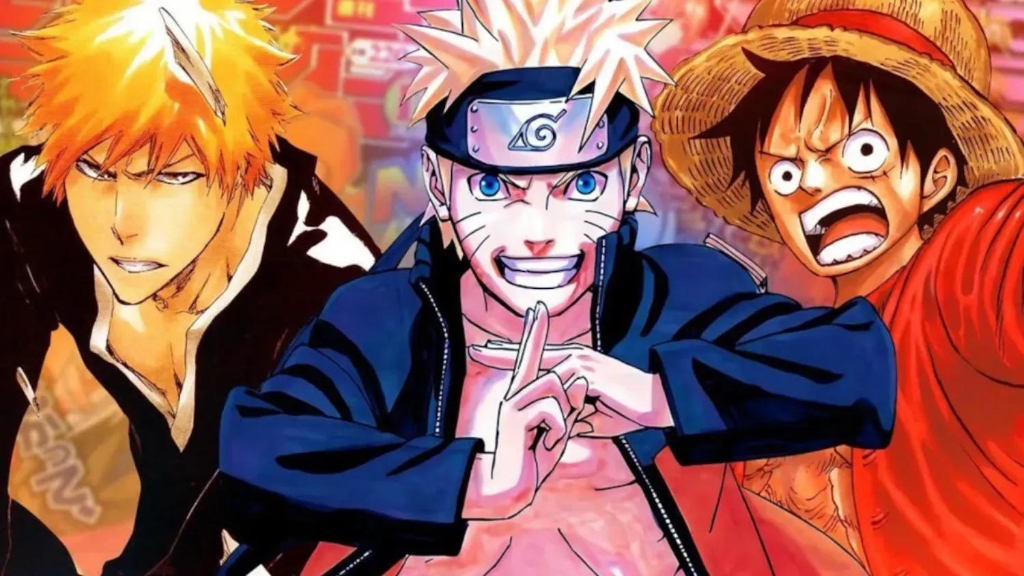
Jujutsu Kaisen is over. My Hero Academia closed its doors, and One Piece is already in its final saga, moving toward its inevitable end.
For the first time since Akira Toriyama put down his pen on Dragon Ball in 1995, Weekly Shonen Jump looks vulnerable.
Naturally, the internet is trying to crown its "New Big Three." Fans are throwing names into a hat—Kagurabachi, Sakamoto Days, and Dandadan—praying that history repeats itself and three massive pillars will hold up the sky for the next 15 years.
It’s not going to happen.
The old "Big Three" era wasn't just a golden age; it was a freak anomaly of the print era that nearly killed the people who made it. What’s taking over now isn’t a new trinity—it’s an entirely different beast.
1. The 15-Year Marathon Is Dead (And Good Riddance)
On one point all fans will agree: the original Big Three model was a human meat-grinder.
Kishimoto, Oda, and Kubo lived on three hours of sleep and decade-long deadlines. Today’s mangaka are following a completely different trajectory.
It started with Demon Slayer. Koyoharu Gotouge told a complete, emotionally devastating story in 205 chapters, walked away healthy, and printed more money in two years than most franchises made in twenty. Gege Akutami followed the exact same playbook with Jujutsu Kaisen.
Modern creators aren't interested in writing 700-chapter marathons with 40-chapter filler tournament arcs. They write high-density, 150-to-250 chapter sprints. The era of the endless shonen is over.
2. The Three Frontrunners (Without the Marketing Hype)
If we must look at the three titles pulling the heaviest cultural weight right now, they are not standard battle shonen anymore. Instead, they are masterclasses in uniqueness and craft level. All three titles feel completely different from each other.
1. Kagurabachi (Takeru Hokazono) — The Raw Kinetic Edge
Remember when chapter one dropped and the entire internet turned it into a sarcastic meme before reading a single page?
Hokazono responded by delivering the cleanest, most cinematic paneling Jump has seen since early Bleach.
- The Strength: Ink economy and visual timing. Hokazono directs fights like a seasoned film editor—every slash has weight, every shadow builds tension, and Chihiro isn't wasting ten panels trying to redeem psychotic villains. He cuts them down.
- The Reality Check: Now past 135+ chapters in, the story has matured into complex multi-faction warfare. But the upcoming anime adaptation will be the true crucible: it will either turn it into a global juggernaut or expose its pacing seams.
2. Sakamoto Days (Yuto Suzuki) — The Spatial Choreography God
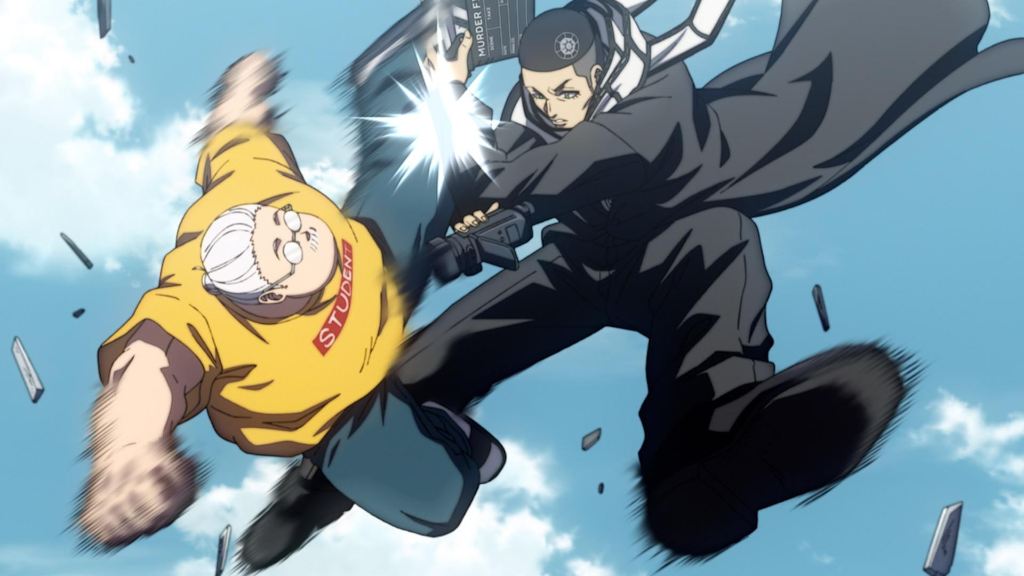
If you ask any professional animator or comic artist what they read for pure inspiration, nine out of ten say Sakamoto Days.
- The Strength: Personally, I believe that Suzuki understands physical space better than almost anyone drawing comics today. A fight on an airplane, an amusement park roller coaster, or a subway car isn't just background filler—it’s a weapon, and you are not just a spectator, you are part of the fight. The panel flow is so smooth that it carries your eye across the page like a camera on a dolly track.
- The Reality Check: It’s an action-comedy first, lore-heavy drama second, targeting a completely different set of audience. It doesn't have the apocalyptic, existential dread that made JJK or Chainsaw Man obsessive watercooler topics. There is no world-ending threat keeping readers hooked like in previous generations.
3. Dandadan (Yukinobu Tatsu) — Unadulterated Creative Anarchy
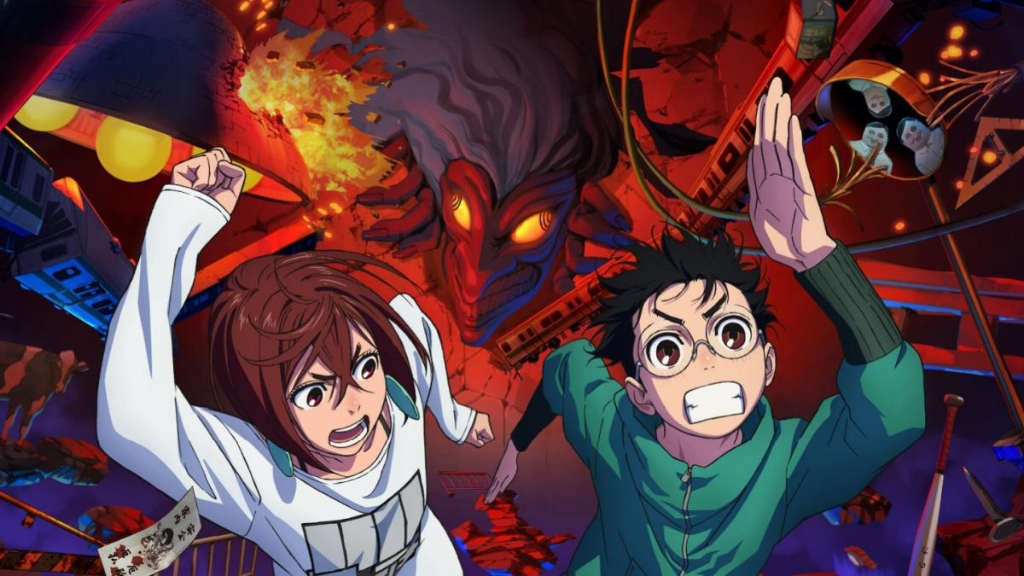
Tatsu spent years assisting Tatsuki Fujimoto (Chainsaw Man) and Yuji Kaku (Hell's Paradise), and it shows.
- The Strength: Total technical freedom. In a single 19-page chapter, you go from laugh-out-loud teenage awkwardness to nightmare-fuel folk horror, followed by an alien invasion drawn with the architectural detail of a renaissance sketch. To be honest, its premise is the most bizarre amidst these three: fighting aliens with the help of ghosts to reclaim your stolen testicles? That unapologetic insanity is its greatest strength.
- The Reality Check: Unlike physical magazines, it lives on Jump+ (the digital app). That gives Tatsu immense creative freedom, but it also shows how fragmented the modern manga audience really is.
3. The Comparison: Old Guard vs. The New Wave
| The Metric | The Old Big Three (One Piece, Naruto, Bleach) | The New Generation (Kagurabachi, Sakamoto, Dandadan) |
|---|---|---|
| Commitment | 10–20 years (500–1,100+ chapters) | 4–6 years (150–250 chapters max) |
| Protagonist | Naive moral idealist ("I’ll never give up!") | Pragmatic, eccentric, or morally grey realist |
| Pacing | Slow burn, extensive training arcs, mid-fight speeches | High-velocity, instant friction, zero wasted panels |
| Where People Read | Physical newsstands and serialized magazines | Manga Plus, digital apps, and vertical readers |
4. The Real Verdict: What Actually Happens After One Piece?
When Oda finally draws the final panel of One Piece, Shonen Jump isn’t going to roll out a new king to take the throne.
That monolithic era is over. The days of everyone tuning into the exact same weekly chapter and arguing in schoolyards or on forums are gone, shattered into a thousand specialized tribes by algorithms, streaming, and digital apps. Half your feed is reading the gritty, bloody revenge of Kagurabachi; the other half is losing their minds over the chaotic, sci-fi occult energy of Dandadan or kicking back with the quiet sports-romance of Blue Box.
And honestly? It's about time.
We don’t need three corporate juggernauts holding a monopoly on what shonen manga is allowed to be for twenty years straight. Let the 15-year, 800-chapter gauntlet die. What the medium actually needs right now are fearless creators moving at a sprint, taking massive narrative risks, and having the creative freedom to finish their stories before the plot rots from the inside out.
The monoculture is dead. Long live the chaos.
The throne isn’t empty. We just don't need a king anymore.
Krishna Kumar
Krishna Kumar is the creator and founder of ZealPlane. A published author and comic creator (G.O.D — Game of Death), creator of Boomba (FictionSaga), and writer of the dark fantasy graphic novel series Karma, he provides technical breakdowns on comic panelling, webtoon canvas slicing, and independent visual storytelling. For corrections, editorial tips, or creative collaborations, contact our desk.
Trending Indie Webcomics & Manga
- Read Chullu aur Lootera Bhoot online free
- Read My most favorite gags of Guddu online free
- Read Chullu aur Khadoos uncle online free
- Read Animocity Review online free
- Read When horror meets humour online free
- Read THE GIRL INSIDE THE CUPBOARD online free
- Read वज्रयोद्धा By Magha Studio online free
- Read Read 'GHOST IN THE CROWD' by Prince Ayush online free
Latest Pop Culture & Comic News
- Solo Leveling: Ragnarok Season 3, The JIN Replacement, and Why the Tapas Shutdown Is a Disaster for Readers
- Clayface (2026) Ending & Post-Credits Explained: How Matt Hagen Fits Into James Gunn's DCU
- Sung Suho Powers Explained: How Jinwoo's Son Mastered Destruction in Solo Leveling: Ragnarok
- Why Marvel Cast Robert Downey Jr as Doctor Doom: Tony Stark Variant Theory vs. Earth-616 Canon Explained
- Who Is Jocasta? Marvel's "Bride of Ultron" in VisionQuest and Her Powers Explained
- How Did Sukuna Bypass Infinity and Kill Gojo in Jujutsu Kaisen? (Binding Vows & World-Cutting Slash Explained)