One Piece Has Passed 600 Million Copies — And Oda Still Hasn't Finished the Story
By ZealPlane Editorial | Senior Pop Culture & Manga Analyst | ZealPlane Chronicles
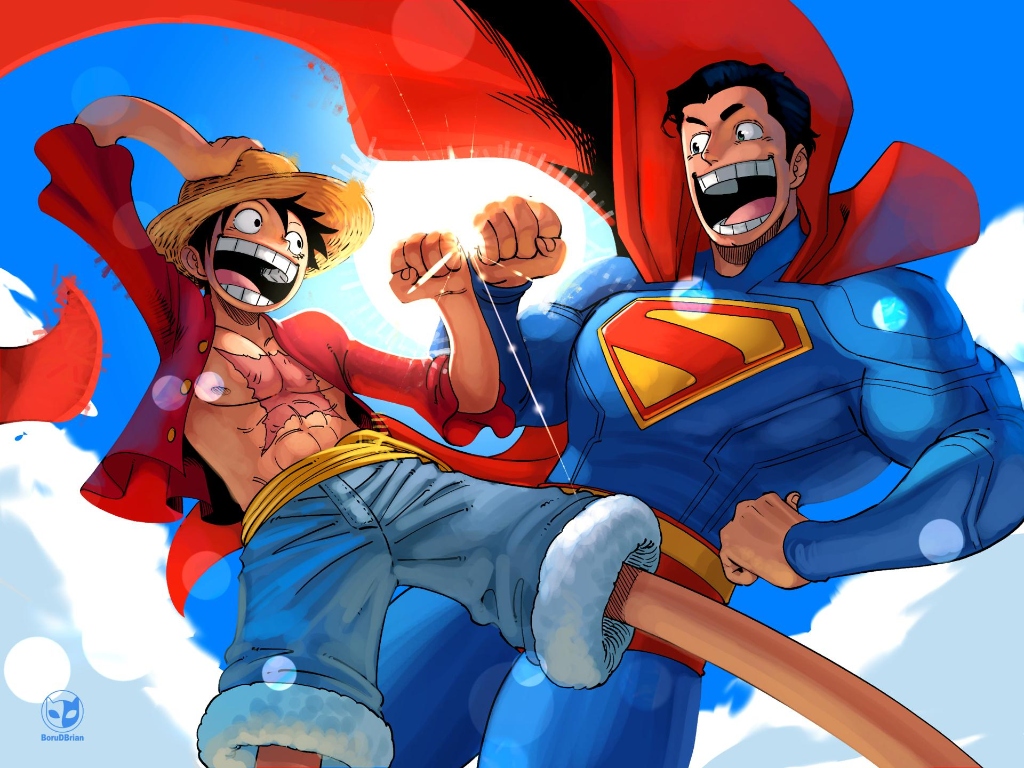
There are manga that become popular. There are manga that become cultural landmarks. And then there is One Piece.
(Looking to revisit where Luffy's journey started? One Piece Vol. 1 (Romance Dawn) is on Amazon India (₹349) →)
On March 4, 2026, Eiichiro Oda's manga crossed a number that almost sounds fictional: 600 million copies in circulation worldwide. The milestone arrived alongside the release of Volume 114, nearly 29 years after Monkey D. Luffy first set out from Foosha Village in a tiny wooden dinghy.
To put that into perspective, when One Piece began serialization in Weekly Shonen Jump in the summer of 1997, the world was an entirely different place. There was no YouTube, no streaming platforms, no TikTok, no legal global simulcasting, and certainly no smartphones in everyone's pocket. The series has survived every tectonic shift in entertainment technology over the last three decades.
And the strangest part of all is that Oda is still sitting at his desk, week after week, drawing the next chapter.
600 million is not just another sales record
The simplest way to describe the achievement is to call One Piece the best-selling manga in human history. While factually accurate, that description fails to convey the sheer velocity and endurance of its trajectory.
The series crossed 300 million copies in circulation by 2013. It reached 440 million by 2018, climbed past 500 million in 2022, and has now pushed through 600 million in 2026. The distance between those benchmarks tells a profound story about readership retention.
One Piece did not enjoy a brief, explosive spike in popularity and then coast on residual goodwill. It kept regenerating its audience. A teenager who fell in love with the Straw Hats during the East Blue saga in 2001 could now be reading the Egghead arc alongside their own children. Meanwhile, someone who boarded the ship during Marineford has spent half their adult life waiting to learn what the treasure actually is.
Generating that level of sustained emotional commitment across generations is exponentially harder than producing a single bestselling hit.
The most absurd part: the journey is still underway
This is where the 600-million milestone departs from every publishing precedent. Most legendary manga franchises cross their monumental lifetime milestones long after the story has wrapped and their sales have solidified into historical monuments.
Dragon Ball completed its original manga run. Naruto crossed the finish line. Demon Slayer concluded its story at the peak of its frenzy. Jujutsu Kaisen recently finished its run. One Piece, by contrast, is still in active motion.
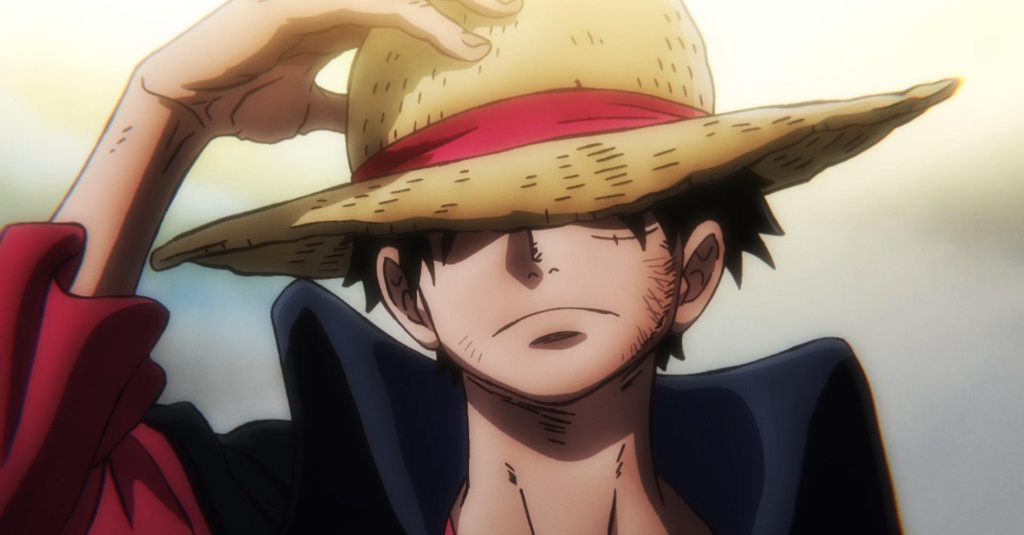
Luffy is still sailing through the Final Saga. The foundational mysteries Oda began seeding in the late nineties—Joy Boy, the Void Century, the Ancient Weapons, the Will of D., the five Elders, and the true nature of the Grand Line itself—are only now reaching their boiling point.
That means 600 million is not a memorial plaque. It is merely a checkpoint on an unfinished map.
Why One Piece keeps pulling in new readers
There is no single formula for this kind of longevity, but much of it comes down to how Oda constructs narrative memory. One Piece is designed so that early chapters continually gain weight rather than lose relevance.
An offhand remark made four hundred chapters ago suddenly becomes a load-bearing pillar of the current arc. A minor pirate encountered in Paradise unexpectedly resurfaces in the New World with profound geopolitical consequences. A goofy visual gag from Volume 12 turns out to be tied directly to ancient mythology.
This creates a rare dynamic between the author and the reader. You are never simply reading to find out what happens this week; you are constantly reassessing whether an innocuous detail you noticed ten years ago was actually the first step toward a master revelation.
That is why One Piece theory culture remains the most active on the internet. Every new chapter triggers heated debates across Discord, Reddit, and YouTube, backed by nearly thirty years of meticulous narrative breadcrumbs.
A machine powered by a single storyteller
While the 600 million figure strictly tracks manga tankobon circulation, One Piece transformed into an empire decades ago. There is the weekly anime, theatrical feature films, console video games, trading card games, high-end figures, theme park exhibits, and a global live-action adaptation on Netflix.
Yet unlike Western superhero franchises that rotate through dozens of writers, artists, and corporate reboots, the heart of the entire One Piece engine remains a single human being drawing each panel by hand.
The upcoming theatrical slate proves this dynamic is still accelerating. The official announcement of ONE PIECE FILM: GOD VALLEY, slated for Japanese theaters in summer 2027, has already ignited the fandom. By adapting the legendary clash involving Rocks D. Xebec, Gol D. Roger, Monkey D. Garp, and the Celestial Dragons, Toei and Oda are bringing the most mythical historical conflict in the lore straight to the big screen.
Instead of slowing down toward the finish line, the narrative world is expanding.
When One Piece finally ends, what will be its greatest legacy?
With 600 million copies sold and the Final Saga underway, what stands out as Eiichiro Oda's ultimate achievement?
Could One Piece reach 700 million?
Predicting publishing ceilings for One Piece has always been a losing game for skeptics. While no one can guarantee 700 million copies, there is every reason to believe the ceiling is still higher.
Every major revelation in the Final Saga serves as a gateway back to Volume 1. When a new reader hears about the shocking developments in the manga, they do not just buy the latest release. They encounter a monumental 100-plus volume library ready to be experienced.
When the final chapter is eventually printed, it will likely trigger the largest binge-reading event in comic book history. Future generations will not have to endure weekly breaks or twenty-year waits. They will be able to experience Luffy's entire journey from the East Blue to Laugh Tale in one continuous voyage.
The real achievement isn't the number
Six hundred million is an staggering statistic, but numbers alone do not explain why people love One Piece.
The true feat is that Oda has made his oldest readers feel that the voyage they embarked on decades ago is still heading toward a worthy destination. In long-running fiction, universes frequently fray, characters lose their voice, and mysteries lose their allure. One Piece has managed to keep its emotional core intact through more than eleven hundred chapters.
One day, the voyage will conclude. The final double-page spread will be published, the secrets of the Void Century will be revealed, and the world will finally know what Gol D. Roger left behind.
Until then, the treasure is still waiting out there on the Grand Line. Six hundred million copies later, we still do not know what the One Piece is. And that might be the greatest tribute to Oda's genius of all.
Latest Chapter Spoilers
One Piece Chapter 1193: Zoro Said 'I'm Still Practicing' and Redefined the Elbaf Endgame →Luffy hits his absolute limit with Gear 5 while Zoro unleashes Conqueror's Haki against Saint Sommers. Read the full spoiler breakdown.
One Piece Vol. 1: Romance Dawn
The iconic first volume where Luffy sets out from Foosha Village and recruits Zoro. The foundation of the 600-million milestone.
Featured Original Indian Indie Comics on ZealPlane
Explore original indie comics available free to read online:
Trending Indie Webcomics & Manga
- Read Chullu aur Lootera Bhoot online free
- Read My most favorite gags of Guddu online free
- Read Chullu aur Khadoos uncle online free
- Read Animocity Review online free
- Read When horror meets humour online free
- Read THE GIRL INSIDE THE CUPBOARD online free
- Read वज्रयोद्धा By Magha Studio online free
- Read Read 'GHOST IN THE CROWD' by Prince Ayush online free
Latest Pop Culture & Comic News
- One Piece Chapter 1196 Spoilers: Sanji Awakens Conqueror’s Haki as Oda Finally Solves His Biggest Character Flaw
- Kagurabachi Anime Confirmed: World Tour Premiere, Release Schedule, and Where to Read the Manga
- Masashi Kishimoto Is Drawing Naruto Again. Here's Everything We Actually Know.
- सुपर कमांडो ध्रुव को हराना नामुमकिन क्यों है? (और यह आपके दिमाग के बारे में क्या सिखाता है)
- 2026 में भारतीय कॉमिक्स ऑनलाइन कहाँ और कैसे पढ़ें? (राज कॉमिक्स, Pratilipi, ToonSutra और नए विकल्प)
- One Piece Chapter 1195 Spoilers: Release Date, Global Schedule, and Early Elbaph Hints