Spider-Noir Just Got 11 Emmy Nominations. Amazon Cancelled It Anyway.
By ZealPlane Editorial | Senior Pop Culture & Manga Analyst | ZealPlane Chronicles
There is something almost absurd about the timing.
(Experience the source material: Spider-Man Noir: The Complete Collection is on Amazon India →)
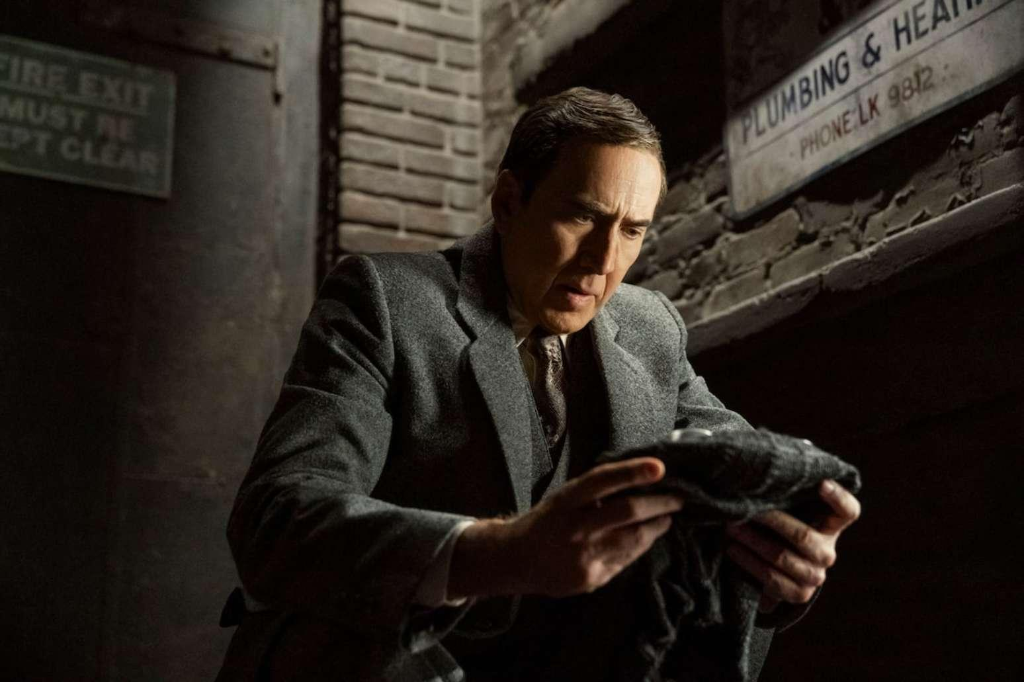
Spider-Noir had spent the last few months quietly becoming one of Prime Video's most unusual success stories. Nicolas Cage finally took on his first regular television role, the creative team built an entire superhero mystery around the shadowy visual language of classic 1930s film noir, and the industry responded in a big way: eleven Emmy nominations.
Then, just days before the 2026 Emmy Awards ceremony, Prime Video pulled the plug.
The series will not return for a second season. And that leaves Spider-Noir in a strange, bittersweet position: it is simultaneously one of the most Emmy-recognized comic adaptations of the year and a one-season experiment whose story has already come to a sudden halt.
The cancellation is real. The reason is less simple.
Prime Video has decided not to renew Spider-Noir after its eight-episode debut season. The series premiered in May, introducing audiences to Nicolas Cage as Ben Reilly, an aging, exhausted version of Spider-Man trying to navigate the corrupt underbelly of 1930s New York as a down-on-his-luck private investigator.
What makes the decision so jarring is that Amazon was openly celebrating the production only weeks earlier.
When the 2026 Emmy nominations were announced, Spider-Noir actually led Prime Video's entire scripted roster with 11 nominations. It finished ahead of high-profile flagship hits like Fallout with ten nominations and The Boys with five, forming a major chunk of Amazon's overall 68-nomination haul across its television catalogue.
Crucially, those nominations were not just polite acknowledgments. They spanned the full technical and artistic architecture of the show: cinematography, production design, main title design, sound editing, visual effects, period makeup, original score, and stunt coordination. In other words, the Television Academy's craft guilds overwhelmingly agreed that Spider-Noir looked, sounded, and felt exceptional.
The Television Academy's official records confirm all eleven nods. So why cancel it now?
That is where the economics of modern streaming come into play.
Too expensive to be merely good
The uncomfortable reality of contemporary streaming is that artistic recognition and corporate viability live on entirely different spreadsheets. A show can be gorgeously shot, universally admired by critics, and still fail the internal algorithmic calculation that greenlights another season.
Several industry reports have pointed toward the production budget of Spider-Noir as a central hurdle. Period dramas set in Depression-era New York are notoriously expensive to mount, and when you combine practical sets, vintage cars, specialized lighting, and complex VFX web-slinging, the cost per episode escalates quickly. Amazon has not released a line-by-line post-mortem, so it would be unfair to pin the decision on a single data point, but the broader pattern across the industry is unmistakable.
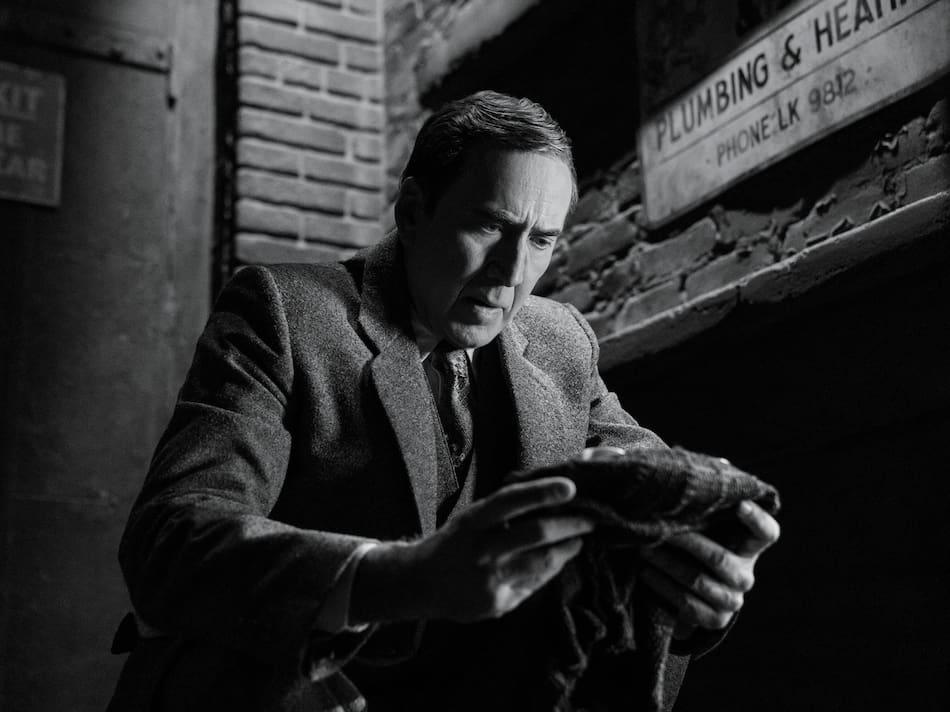
From the outside, Spider-Noir looked like exactly the kind of prestige project streamers claimed they wanted. It was distinct. It leveraged recognizable Marvel intellectual property without blending into the interchangeable, neon-lit digital mush of standard origin stories. It had a genuine Hollywood star giving an understated, weary performance. And above all, it had a fearless creative identity: viewers could even toggle between full color and black-and-white presentations to match the pulpy gumshoe aesthetic.
You cannot say that about most superhero shows released in the past five years.
The strangest part may be what happens next
The sudden end of Spider-Noir does not mean Sony Pictures and Amazon are closing the door on their broader partnership. Quite the opposite.
The series was simply the opening salvo in an expansive multi-series agreement between Sony Pictures Television and Amazon MGM Studios to develop live-action projects centered around characters in Sony's Spider-Man universe. Industry reports indicate that alternative projects are already moving through active development.
That makes the cancellation even more revealing. Amazon is not abandoning the concept of street-level Marvel stories. It is simply stating that this specific, high-cost auteur take on Ben Reilly did not generate the mass retention numbers needed to justify a second run.
For years, comic-book television lived in a bubble where IP alone was assumed to guarantee massive viewership. Today, a marquee superhero name might earn you an opening weekend click, but it no longer guarantees the completion rate required to survive renewal season.
Why this cancellation stings so much for comic readers
There is another reason the news has sparked frustration across comic communities: Spider-Noir was not constructed like a disposable franchise filler.
It had an unmistakable sense of place, atmosphere, and melancholy. The eight episodes took their time establishing Ben Reilly's guilt, the weight of the city he failed to protect, and the personal tragedy that dragged him back into the shadows. That kind of serialized noir mystery naturally deepens once the origin work is out of the way and the ensemble finds its groove.
Instead, Spider-Noir will now exist solely as a standalone mini-series. It was not cancelled because audiences hated it. It was not buried by poor reviews, nor was it ignored by the Academy. It simply ran headfirst into the cold math of peak-streaming belt-tightening.
Was cancelling Spider-Noir the right decision?
Eleven Emmy nominations, a unique noir identity, yet cancelled after eight episodes. Where do you stand on Prime Video's choice?
The question fans should actually be asking
Maybe the most important takeaway here is not that Amazon cancelled another superhero property. Maybe it is that being a thoughtful, beautifully produced piece of television is no longer enough to stay alive.
If Spider-Noir had landed with a thud, received abysmal scores, and vanished without a trace, no one would be writing about it. But the Television Academy recognized it eleven times over. That leaves an uncomfortable question hanging over the future of experimental comic adaptations: how big of an audience does a creative risk need before a streaming network considers it worth protecting?
For now, all eight episodes remain on Prime Video. The series will walk into the Emmy Awards as an acclaimed one-season statement rather than the launchpad for a multi-year franchise.
Some cancelled shows become forgettable trivia. Others turn into cult classics that viewers discover years later, wondering how executives ever let them slip away. There is a quiet irony in a Spider-Man story ending this way: a character defined by surviving against impossible odds, ultimately felled by the unseen numbers on a streaming dashboard.
Spider-Man Noir: The Complete Collection
All four miniseries collecting Peter Parker's 1930s Great Depression hardboiled adventures, mob wars, and mystical spider-god lore.
Featured Original Indian Indie Comics on ZealPlane
Explore original indie comics available free to read online:
Trending Indie Webcomics & Manga
- Read Chullu aur Lootera Bhoot online free
- Read My most favorite gags of Guddu online free
- Read Chullu aur Khadoos uncle online free
- Read Animocity Review online free
- Read When horror meets humour online free
- Read THE GIRL INSIDE THE CUPBOARD online free
- Read वज्रयोद्धा By Magha Studio online free
- Read Read 'GHOST IN THE CROWD' by Prince Ayush online free
Latest Pop Culture & Comic News
- One Piece Chapter 1196 Spoilers: Sanji Awakens Conqueror’s Haki as Oda Finally Solves His Biggest Character Flaw
- Kagurabachi Anime Confirmed: World Tour Premiere, Release Schedule, and Where to Read the Manga
- Masashi Kishimoto Is Drawing Naruto Again. Here's Everything We Actually Know.
- सुपर कमांडो ध्रुव को हराना नामुमकिन क्यों है? (और यह आपके दिमाग के बारे में क्या सिखाता है)
- 2026 में भारतीय कॉमिक्स ऑनलाइन कहाँ और कैसे पढ़ें? (राज कॉमिक्स, Pratilipi, ToonSutra और नए विकल्प)
- One Piece Chapter 1195 Spoilers: Release Date, Global Schedule, and Early Elbaph Hints